Travel to Sedona: A Slow Red Rock Trip Guide
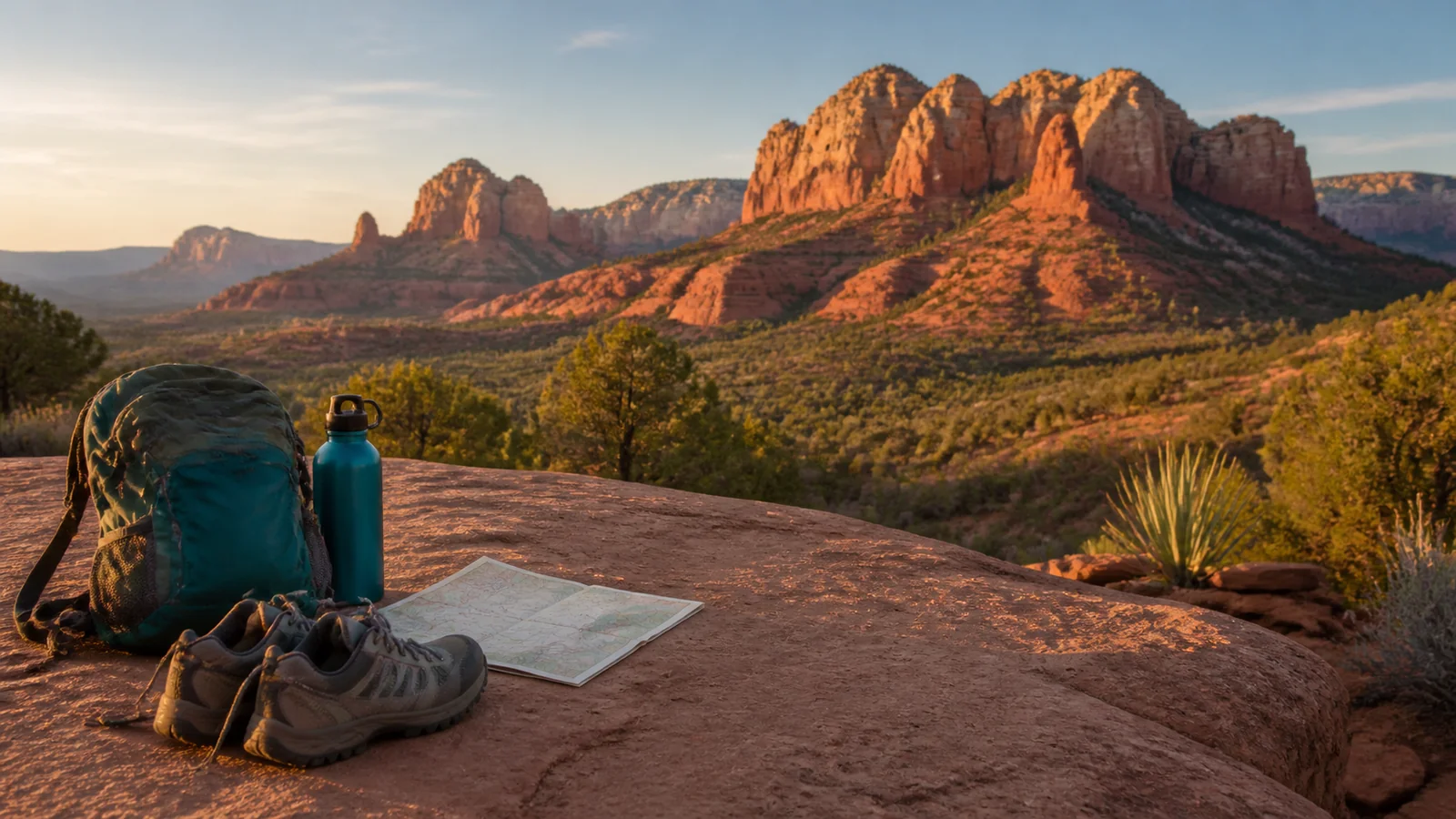
Sedona Is Better When You Do Less Each Day
Travel to Sedona can sound like a simple red rock escape: book a room, choose a hike, watch the cliffs glow, repeat. The place is that beautiful, but it is also busy, spread out, sun-exposed, and shaped by parking limits. A rushed Sedona trip can turn into traffic, trailhead stress, and too many midday miles.
The calmer version starts with rhythm. Pick a base that matches how you will move, plan popular trailheads around shuttles or early starts, leave space for heat and crowds, and treat the town as more than a backdrop for one famous photo.
Sedona rewards slow mornings and soft evenings. It is a place for red rock views, creek shade, galleries, short scenic drives, coffee breaks, and hikes that do not need to become personal endurance tests. If you build the trip around two good anchors per day, the rest can stay open.
Choose the Right Base First
Sedona is not one compact downtown where everything sits within a few blocks. Most travelers think in a few practical zones: Uptown Sedona, West Sedona, the Village of Oak Creek area, and Oak Creek Canyon. Each one changes the trip.
Use this quick guide:
| Base area | Best for | Tradeoff |
|---|---|---|
| Uptown Sedona | First-time visitors, views, shops, restaurants, visitor center access | Can feel busy and tourist-heavy |
| West Sedona | Practical stays, groceries, restaurants, many services | Less postcard-like from the curb |
| Village of Oak Creek | Bell Rock and Cathedral-area access, slightly calmer feel | Farther from Uptown and Oak Creek Canyon |
| Oak Creek Canyon | Creek shade, cabin mood, quieter evenings | More driving for town meals and some trailheads |
If you want a slow trip, do not choose lodging only by the lowest rate. Map the places you will actually use: morning coffee, shuttle lot, dinner, grocery stop, trailhead access, and the route back after dark. A simple room in the right area can serve the trip better than a prettier stay that adds driving every day.
For more on judging simple lodging, use our travel inn checklist before you book.
Plan Around Parking, Shuttles, and Trailhead Timing
Sedona’s most famous trails are popular for a reason. Cathedral Rock, Devil’s Bridge access, Soldier Pass, Little Horse, Mescal, and other red rock routes can be busy, especially around weekends, holidays, spring break, and pleasant-weather months.
The Sedona Shuttle helps reduce pressure at several popular trailheads. Its trailhead routes operate on a regular schedule, with park-and-ride lots and no reservations for fixed trailhead shuttles. Service patterns can expand during busy periods, so check the current schedule before you shape your days.
Build your plan like this:
- Choose one main hike or outdoor anchor per day.
- Check whether that trailhead uses a shuttle, has parking limits, or closes parking when shuttles run.
- Start early or shift to late afternoon when weather and safety allow.
- Keep a backup walk, viewpoint, gallery, or creek stop nearby.
- Do not stack far-apart trailheads just because they look close on a map.
This is where Sedona punishes overplanning. A five-mile drive can take longer than expected when roads are full. A short hike can take longer when sun, photos, and rocky footing slow you down. Leave room.
Use a Two-Part Day
The easiest Sedona rhythm is a two-part day: one active outdoor block and one softer town or view block. That keeps the trip open without wasting the best light.
A simple day might look like:
- Early coffee and a short hike
- Late breakfast or snack
- Rest, pool time, gallery browsing, or a scenic drive
- Late afternoon viewpoint or easy walk
- Dinner without a long drive afterward
In hotter months, the middle of the day is not the time to prove anything. In cooler months, you may have more hiking room, but daylight is shorter and trail conditions can still change. Sedona is scenic in every season, but the best schedule changes with temperature, daylight, and crowd pressure.
If you are comparing hot-weather destinations, our summer travel guide has the same basic rule: choose the rhythm before you chase the highlight.
Pick Hikes by Energy, Not Just Fame
Sedona hiking is not all one difficulty level. Some routes are short but steep. Some are exposed. Some require route-finding confidence. Some are popular enough that the social experience becomes part of the hike, whether you want it or not.
Choose by mood:
| Travel mood | Better fit |
|---|---|
| First red rock walk | Bell Rock Pathway or a short scenic trail |
| Big view with effort | Cathedral Rock, if conditions and fitness match |
| Photo-famous route | Devil’s Bridge access, planned around shuttle and crowds |
| Gentler scenery | Creekside walks or shorter viewpoint stops |
| Quiet morning | Less famous trails near your base, chosen with current conditions |
Do not treat Instagram fame as a safety rating. Check distance, elevation, shade, road access, and whether the route suits everyone in your group. Carry water, use sun protection, and turn around before the day stops being fun.
Leave Space for Non-Hiking Sedona
Sedona is often sold through hikes and red rock viewpoints, but a good trip does not need to be trail-only. The town has galleries, spas, cafes, scenic drives, small shops, local markets, and quiet places to sit with the cliffs in view.
Good slower options include:
- Browsing galleries and courtyards instead of packing another hike
- Visiting a scenic overlook near sunset, with a backup if parking is full
- Taking a low-pressure drive through red rock scenery
- Planning a creekside rest when heat builds
- Choosing one longer meal instead of rushing between viewpoints
- Stopping at the visitor center for local maps and current advice
This matters because Sedona can feel oddly competitive. Everyone seems to have a must-do trail, must-see vortex, must-book tour, or must-catch sunrise spot. You do not need to turn the trip into a checklist. A slow walk, a quiet breakfast, and one good red rock view can be enough for a day.
Think Carefully About Cars
Most Sedona trips are easier with a car, especially if you are staying outside the most central areas or pairing Sedona with Phoenix, Flagstaff, the Grand Canyon, or other Arizona stops. But having a car does not mean you should drive to every trailhead.
Use the car for:
- Arrival and departure
- Grocery stops
- Scenic drives
- Reaching your lodging
- Exploring areas not covered by shuttles
Use shuttles or walking when they make more sense. A shuttle can save you from circling a full lot or adding pressure to places already struggling with traffic. If your lodging is near restaurants or shops, build some car-free evenings into the trip. Sedona feels different when you are not always solving the next parking problem.
Decide How Many Days You Need
You can visit Sedona in one day, but it will feel like a taste. Two nights is better for a first slow trip. Three or four nights lets you adjust for weather, crowds, sore legs, and one unplanned discovery.
Use this planning frame:
| Trip length | What it can support |
|---|---|
| Day trip | One viewpoint or short hike, one meal, limited flexibility |
| 1 night | Sunset, one morning hike, quick town time |
| 2 nights | Two outdoor anchors, one softer afternoon, better pacing |
| 3 to 4 nights | Hikes, galleries, creek time, scenic drives, weather backup |
If Sedona is part of a larger Arizona route, do not pack every day with long transfers. Phoenix to Sedona is manageable by car, but arrival still takes energy. Flagstaff, Jerome, Cottonwood, and the Grand Canyon can pair well with Sedona, but each adds driving and decision fatigue.
What to Pack for a Calmer Sedona Trip
Sedona packing is less about looking outdoorsy and more about being comfortable in changing conditions. Bring enough for sun, dust, cool mornings, and rocky walking.
Useful basics:
- Comfortable walking or hiking shoes with grip
- Refillable water bottle
- Sun hat and sunglasses
- Layers for cool mornings or winter evenings
- Small day pack
- Offline maps or downloaded trail details
- Snacks for longer walks
- Swimwear if your lodging has a pool or creek access
- A light rain layer during storm-prone periods
Keep your day bag simple. Heavy packs make short walks feel longer, especially on exposed trails. If you are flying carry-on only, our budget backpack guide can help you choose a setup that works for city-and-nature trips.
Common Sedona Mistakes to Avoid
The biggest mistake is trying to do every famous thing in one short visit. Sedona looks compact on a screen, but crowds, heat, road curves, and parking change the pace.
Avoid these traps:
- Booking lodging far from your real plans because it is cheaper
- Assuming every trailhead has easy parking
- Starting exposed hikes too late in hot weather
- Scheduling sunrise, a hard hike, a tour, a scenic drive, and a sunset viewpoint on the same day
- Ignoring shuttle schedules
- Wearing new shoes on rocky trails
- Treating spiritual or cultural sites like props
- Leaving no backup for wind, rain, smoke, closures, or fatigue
The fix is simple: choose fewer anchors and protect the gaps between them.
FAQ
How many days do you need in Sedona?
Two nights is a good minimum for a slower first visit. Three or four nights gives you more room for hikes, weather changes, galleries, scenic drives, and rest.
Do you need a car to travel to Sedona?
Most travelers find a car useful for reaching Sedona and moving between lodging areas. Once there, the Sedona Shuttle can help with several popular trailheads, and some areas work for short walks to meals or shops.
What is the best time of year to visit Sedona?
Spring and fall are popular because temperatures are often easier for hiking, but they can also be busy. Winter can be quieter and beautiful, while summer requires careful heat planning and early starts.
Is Sedona good if you do not hike?
Yes. You can enjoy scenic drives, viewpoints, galleries, spas, restaurants, creek areas, and quiet red rock views without doing difficult hikes. Choose lodging and activities around comfort rather than trail ambition.
Where should first-time visitors stay in Sedona?
Uptown works well for first-time visitors who want easy access to shops, restaurants, views, and the visitor center. West Sedona is practical for services and food, while Village of Oak Creek can feel calmer and closer to several red rock routes.
The Bottom Line
Travel to Sedona is best when you stop treating the place like a list of famous stops. Pick a useful base, plan around shuttle and parking realities, give the best light to one outdoor anchor, and keep the rest of the day gentle.
Sedona does not need you to rush. The red rocks do most of the work when you leave enough room to notice them.
You might also like

Travel Tea: How to Pack and Brew Calmly
Pack travel tea without fuss by choosing the right leaves, tools, water routine, and airport-friendly setup.
Travel Brochure: How to Use One for Slow Trips
Turn a travel brochure into a flexible city plan by reading maps, neighborhoods, transit, seasons, and local clues.
Travel Trailers for Sale Near Me: A Smart Guide
Shop local travel trailers by tow limits, floor plan, storage, inspection needs, ownership costs, and real trip style.