Travel Tea: How to Pack and Brew Calmly
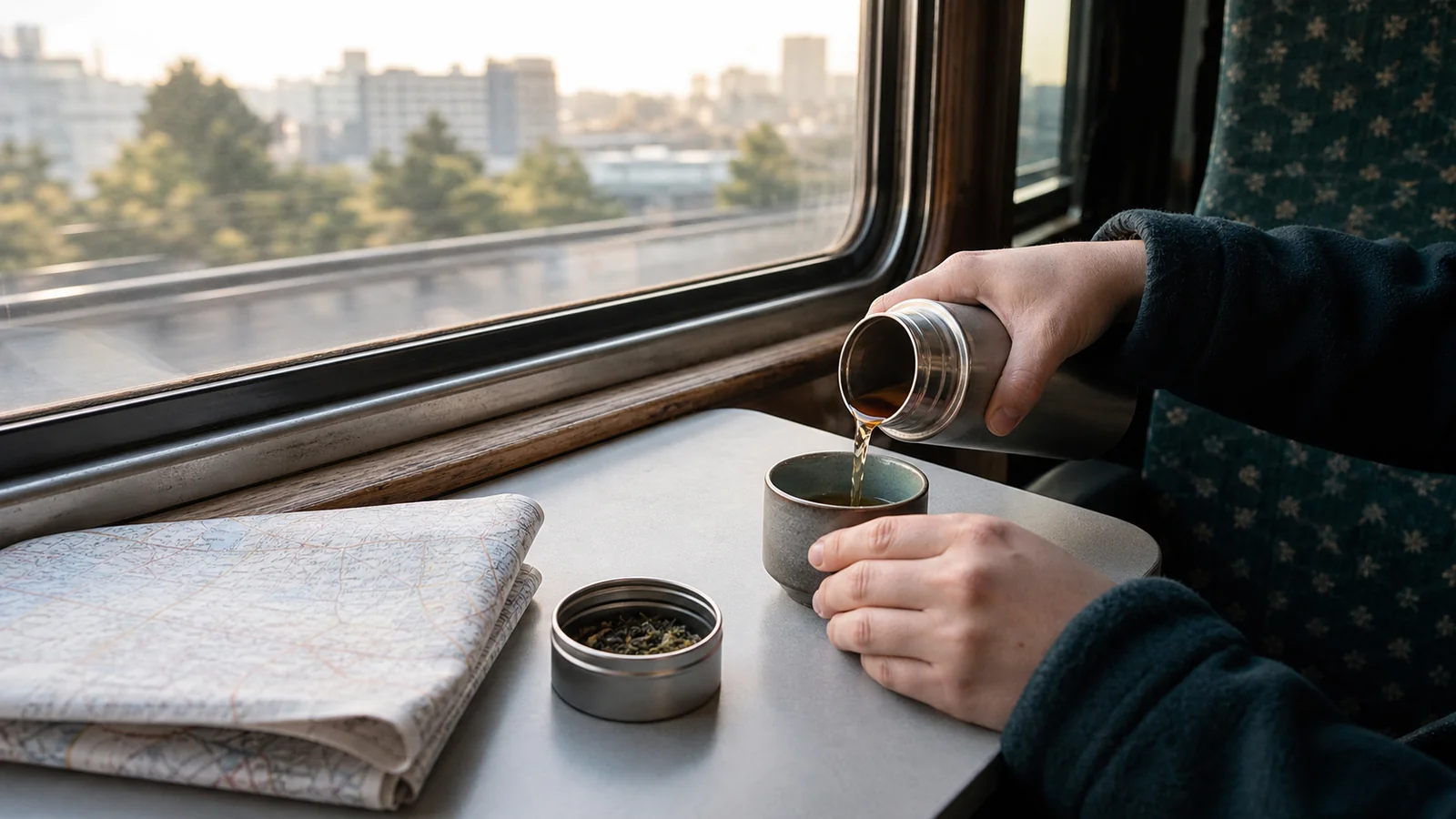
Travel Tea Works Best When It Stays Simple
Travel tea can mean a few sachets in a backpack, a tiny tin of loose leaf, a thermos for train days, or a full portable brewing kit. The right setup depends less on how serious you are about tea and more on the rhythm of the trip. A city weekend, a month of apartment stays, and a multi-country rail route all need different levels of gear.
The goal is not to rebuild your home tea shelf in a hotel room. The goal is to make one small morning ritual easy enough that you will actually use it.
For Mapless Mornings, travel tea fits the same slow-travel logic as a good neighborhood walk. It gives the day a softer start, helps you pause before choosing a route, and turns a strange room or station bench into something a little more familiar.
Start With the Kind of Trip You Are Taking
Before you pack tea, picture the actual mornings.
Ask:
- Will you have a hotel room, apartment, hostel, cabin, or train compartment?
- Will there be a kettle, microwave, cafe access, or no reliable hot water?
- Are you flying, driving, or traveling by train?
- Will you cross borders with tea in your bag?
- Do you want one dependable cup each morning or several brews through the day?
- Do you care more about flavor, caffeine, comfort, or routine?
A tea setup that feels lovely at home can become annoying on the road if it needs too many parts. A setup that is slightly less elegant but easy to clean may be the better travel choice.
Tea Bags, Sachets, or Loose Leaf?
There is no moral victory in packing the most elaborate option. Choose by convenience and cleanup.
| Tea format | Best for | Tradeoff |
|---|---|---|
| Individually wrapped tea bags | Flights, short trips, shared rooms | More packaging, usually less control |
| Sachets or pyramid bags | Better flavor with easy cleanup | Can be bulky for long trips |
| Loose leaf in a tin | Longer stays, favorite teas, better quality | Needs an infuser and waste plan |
| Compressed tea or mini cakes | Long trips, repeated brewing | Needs more tea knowledge |
| Instant tea powder | Ultralight packing, cold drinks | Flavor and sugar vary widely |
For most travelers, the calmest choice is a mixed approach: a few wrapped bags for transit days and one small tin of loose leaf for slower mornings. That gives you a backup when the room is cramped or the train is moving, without giving up the pleasure of a better cup when you have time.
What Airport Security Usually Cares About
Dry tea is easier to travel with than brewed tea. In the United States, TSA lists dry tea bags and loose tea leaves as allowed in both carry-on and checked bags. They are solid food items, so they are not treated like liquids or gels.
Brewed tea is different. Once tea is liquid, it follows the same carry-on liquid limits as other drinks. If you want tea after security, bring dry tea and fill your cup with hot water airside, or buy a drink after the checkpoint.
To keep screening simple:
- Keep tea in clear, tidy packaging.
- Avoid mystery powder in unmarked bags.
- Do not overpack large loose quantities in your carry-on.
- Put metal tins where they are easy to remove if asked.
- Keep matcha or powdered tea in labeled packaging.
- Give yourself time if your bag includes several food items.
Security officers can still inspect any item. A neat pouch with labels is easier for everyone than a collection of unlabeled packets tucked through every pocket.
Customs and Border Crossings Need More Care
Airport security is only one part of the trip. Customs rules are different, especially when you bring food or agricultural products across a border.
For U.S. entry, official customs and agriculture guidance tells travelers to declare agricultural products. Tea may often be allowed, but the important habit is to declare it, keep it sealed when possible, and let the officer decide. Other countries have their own rules, especially for plant products, herbs, seeds, fruit blends, and anything homemade.
Use this simple rule: if you cross an international border with tea, keep it in original packaging and declare it when required. Do not hide it because it “seems harmless.” A few seconds of honesty is calmer than a long inspection caused by a forgotten food item.
Be more cautious with:
- Loose herbal blends with seeds, flowers, fruit peel, or roots
- Homemade tea blends
- Fresh leaves or plant material
- Unlabeled market purchases
- Very large quantities
- Tea mixed with dairy powder, honey, or other ingredients
If you buy tea as a souvenir, ask the shop to keep the label visible. For serious purchases, keep the receipt too. It helps show what the product is and where it came from.
A Small Travel Tea Kit That Actually Works
You do not need much.
A practical travel tea kit can include:
- Two to six wrapped tea bags for backup
- One small tin or pouch of favorite loose leaf
- A basket infuser or fillable paper filters
- A leak-resistant travel mug or thermos
- A tiny cloth or napkin
- A few empty paper envelopes or a small waste bag
- Optional sweetener packets
That is enough for most trips. If you pack more, make each item defend its space.
The Easiest Setup
For short city trips, pack individually wrapped tea bags and a travel mug. That is it. You can use hotel hot water, airport lounge hot water, a cafe refill, or an apartment kettle without cleaning leaves from an infuser.
The Better Flavor Setup
For longer stays, add one compact infuser and a small tin of loose leaf. A wide basket infuser is easier to clean than a novelty infuser with tiny holes. Fillable paper filters are useful if you want loose leaf without cleanup in a hotel sink.
The Train-Day Setup
For a long train or bus day, brew before you leave and carry a sealed thermos. This is simpler than trying to make tea in motion. Choose a thermos you can drink from easily, open safely, and clean at night.
If you are already refining small packing choices, our guide to practical travel gifts uses the same test: the item has to earn its space in a real bag.
Choose Teas That Handle Imperfect Water
Travel water is rarely perfect. Hotel kettles, airport hot-water taps, and apartment kitchens may not give you precise temperature control. Pick teas that forgive rough conditions.
Good travel choices include:
- Black tea for reliable flavor with boiling water
- Roasted oolong for warmth and flexibility
- Genmaicha for a mellow cup that handles food well
- Peppermint or ginger tea for caffeine-free evenings
- Rooibos for a sturdy non-caffeinated option
- Simple green tea bags if you can avoid oversteeping
More delicate green, white, and high-end oolong teas can be lovely, but they often want cooler water and careful timing. Save them for stays where you have a real kettle and a relaxed morning.
Also think about smell. A strong smoked tea or heavily spiced blend may be wonderful to you and overwhelming in a tiny shared room.
Hot Water Is the Real Travel Problem
Tea is easy. Hot water is the variable.
Common sources include:
- Hotel room kettle
- Apartment kettle
- Coffee maker used only for hot water
- Microwave
- Cafe hot water
- Airport lounge or station cafe
- Thermos filled before leaving
- Portable travel kettle
A portable kettle can be useful for long stays, road trips, or rooms without reliable hot water. But it adds weight, takes space, and may need a plug adapter or voltage check. If you travel internationally, confirm the voltage and plug situation before packing any electric device.
Our guide to travel adapters explains the key difference between changing plug shape and changing voltage. That matters if you are tempted to bring a kettle from home.
Hotel Kettles, Coffee Makers, and Cleanliness
Hotel hot-water setups vary. Some are spotless. Some are not.
Before using a room kettle:
- Look inside it.
- Check for residue, odor, or scale.
- Boil and discard one full round of water if it seems reasonable.
- Avoid using it if it smells strange.
- Use a cafe, lobby, or your own thermos if you feel unsure.
Coffee makers can leave coffee oils and flavors behind. If you only need caffeine, that may not matter. If you want clean tea flavor, it matters a lot. Run plain water through first, and skip the machine if the water still smells like old coffee.
In an apartment rental, wash the kettle lid, spout, and handle area if supplies are available. You do not need to be dramatic about it. You just want the first cup of the morning to taste like tea, not yesterday’s kitchen.
How to Brew Without Turning the Sink Into a Problem
Loose leaf creates one practical question: where do the leaves go?
Do not rinse a large amount of leaves down a hotel sink. It can clog drains, and it is rude to the next person dealing with the room.
Better options:
- Use tea bags on short stays.
- Use fillable paper filters and throw them away.
- Tap wet leaves into a trash liner.
- Let leaves cool, wrap them in a tissue, and discard them.
- Carry a small reusable pouch for spent leaves on transit days.
If you use an infuser, rinse it soon after brewing. Dried leaves stick, and the smell gets stronger in a warm room. A tiny cloth or napkin helps you dry the infuser before packing it back into a pouch.
Tea for Flights, Trains, and Long Walking Days
Tea can help a travel day, but it can also become one more thing to manage.
For flights, bring dry tea and an empty bottle or mug. After security, fill it only when you are ready to drink. Be careful with hot liquid in a crowded boarding area or during turbulence. On board, ask for hot water only if the service routine allows it and you can handle the cup safely.
For trains, tea is easier. A sealed thermos can make a long ride feel slower and more comfortable. Pick a tea that still tastes good after sitting for an hour. Black tea, roasted oolong, and many herbal teas work better than delicate greens.
For walking days, think about temperature and bathrooms. A large thermos of tea sounds cozy in winter and less appealing on a hot afternoon. In warm cities, cold-brew tea in a bottle can be a better choice. Put a tea bag or a small amount of leaves in cold water, let it steep gently, and remove the tea before it gets bitter.
Build a Morning Tea Routine in a New City
The best use of travel tea is not only the drink. It is the pause.
Try this simple routine:
- Put water on before opening maps or messages.
- Choose one neighborhood or anchor for the day.
- Check weather and transit while the tea steeps.
- Write down one flexible idea, not a full schedule.
- Drink before packing the day bag.
This protects the morning from becoming all logistics. You still plan, but you plan with a cup in hand instead of reacting to ten tabs at once.
If you like planning with slower physical cues, our travel brochure guide has a similar rhythm: use a map or guide to orient yourself, then leave space for the city to interrupt.
Common Mistakes to Avoid
The usual travel tea mistakes are small but annoying.
Avoid:
- Packing too many teas for a short trip
- Bringing loose leaf with no cleanup plan
- Forgetting that brewed tea counts as liquid at airport security
- Carrying unlabeled powders through screening
- Crossing borders with homemade blends and no label
- Assuming every hotel room has clean hot water
- Packing an electric kettle without checking voltage
- Bringing a fragile mug
- Oversteeping delicate tea in boiling water
- Letting wet tea gear sit sealed in a pouch
The fix is simple: pack less, label clearly, and design the setup around the least convenient morning of the trip.
A Simple Packing Checklist
For a one-week city trip, this is enough:
- 4 wrapped tea bags
- 1 small tin of loose leaf, if you care
- 1 basket infuser or 5 paper filters
- 1 leak-resistant mug or thermos
- 1 napkin or small cloth
- 1 tiny waste envelope
- Optional sweetener
For a longer stay, add more tea only after you know hot water will be easy. You can often buy tea locally, which may be more interesting than carrying a month’s supply from home.
FAQ
Can I bring tea bags on a plane?
In the United States, TSA allows dry tea bags and loose tea leaves in both carry-on and checked bags. Brewed tea is a liquid and must follow carry-on liquid rules before security.
Should I pack loose leaf tea or tea bags?
Tea bags are easier for short trips and transit days. Loose leaf is better for longer stays if you also pack an infuser or paper filters and have a cleanup plan.
Do I have to declare tea at customs?
Rules depend on the country. When entering the United States, travelers are told to declare agricultural products. Keep tea sealed and labeled, and declare it when required.
Is a travel kettle worth packing?
A travel kettle can be useful for long stays, road trips, or rooms without hot water. For short city trips, it is often easier to rely on hotel, apartment, cafe, or station hot water.
What tea is best for travel?
Choose sturdy teas that handle imperfect water: black tea, roasted oolong, peppermint, ginger, rooibos, or simple green tea bags. Save delicate teas for places with better water control.
The Bottom Line
Travel tea should make the day calmer, not heavier. Pack a small setup, keep labels clear, respect airport and customs rules, and choose teas that tolerate imperfect water.
The best travel tea kit is the one you will use without thinking too much: one cup, one quiet morning, one loose plan for the city ahead.
You might also like
What Is a Travel Adapter? A Simple Guide
Learn what a travel adapter does, when you need a converter, and how to pack the right plug setup for a lighter trip.
Travel Brochure: How to Use One for Slow Trips
Turn a travel brochure into a flexible city plan by reading maps, neighborhoods, transit, seasons, and local clues.
Travel Trailers for Sale Near Me: A Smart Guide
Shop local travel trailers by tow limits, floor plan, storage, inspection needs, ownership costs, and real trip style.