Best Budget Travel Backpacks for Carry-On Trips
What a Budget Travel Backpack Needs to Get Right
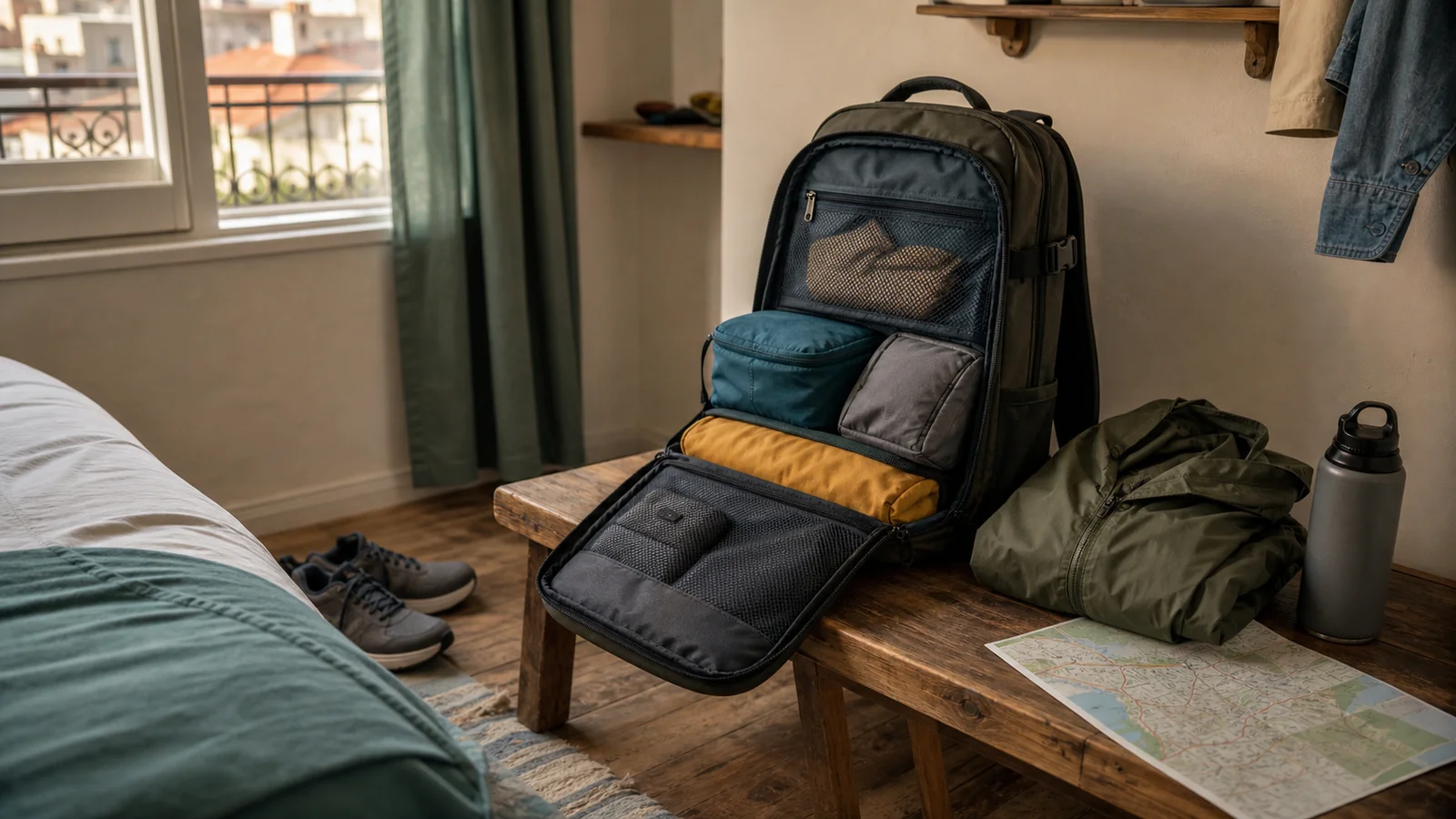
The best budget travel backpacks are not just cheap versions of expensive bags. They solve the core travel problem without asking you to pay for premium fabric, rare hardware, or a brand name you do not need. A good budget backpack should fit common airline limits, open wide enough to pack neatly, carry a laptop safely, and stay comfortable while you cross a station or walk to a guesthouse.
We look for simple, proven features: a clamshell or panel opening, padded shoulder straps, a stable back panel, useful handles, and enough structure that the bag does not collapse when half full. Water-bottle pockets, sternum straps, and lockable zippers are nice bonuses, but they are not worth much if the bag feels painful after twenty minutes.
If you are building a small travel kit, pair the backpack with a slim travel wallet so passports, cards, and backup cash do not disappear inside the main compartment.
Quick Picks by Travel Style
| Best for | Capacity range to consider | What matters most |
|---|---|---|
| Weekend city breaks | 24-32 liters | Low weight, laptop sleeve, personal-item fit |
| One-bag budget trips | 35-45 liters | Clamshell opening, hip belt or sternum strap, compression |
| Digital nomad basics | 28-40 liters | Laptop protection, charger pockets, easy airport access |
| Hostels and rail travel | 30-40 liters | Durable fabric, lockable zipper pulls, side handle |
| Strict personal-item travel | 20-28 liters | Exact airline dimensions, soft sides, under-seat shape |
Capacity numbers are only a starting point. Shape matters just as much. A boxy 28-liter backpack may hold more useful clothing than a tall 34-liter hiking pack with curved space you cannot fill cleanly.
Best Overall Budget Style: A 35-Liter Clamshell Backpack
A 35-liter clamshell backpack is the sweet spot for many low-cost trips. It opens like a suitcase, works with packing cubes, and can still feel manageable on buses, trams, and hostel stairs. It is large enough for a week if you pack light, but small enough that you are less tempted to carry extra shoes and heavy “just in case” clothes.
Look for these details:
- A main compartment that opens at least three-quarters of the way
- Compression straps inside or outside the bag
- A laptop sleeve that does not sit loose against the outer wall
- A side or top handle for train racks and overhead bins
- Shoulder straps with real padding, not thin foam
Many travelers compare affordable clamshell bags from CabinZero, Tomtoc, Bagsmart, Decathlon, and Amazon Basics. Model names and dimensions shift, so check the current measurements before you treat any bag as airline-safe.
Best Under-Seat Option: A Soft 25- to 30-Liter Pack
If you fly low-cost carriers or avoid overhead bins, a smaller soft-sided backpack can be the smarter budget choice. Soft sides help the bag slide under seats, especially when it is not packed to the limit. This size is also easier for everyday city wandering after you arrive.
The tradeoff is clothing space. You need a tighter packing list and fewer bulky items. This style works best for short trips, warm-weather routes, and travelers who can do laundry every few days.
Choose an under-seat backpack if you:
- Book basic economy fares often
- Move through crowded cities by train or bus
- Carry a laptop and one or two packing cubes
- Prefer one small bag over a roller suitcase
Check the airline’s personal-item limits before each trip. A backpack that fits one carrier may be too tall for another, and staff may measure bags differently at busy gates.
Best for Longer Budget Trips: A 40-Liter Travel Pack
A 40-liter bag can handle longer travel without jumping into checked-luggage territory. It gives you room for layers, sandals, toiletries, and a compact second outfit system. The best versions still open like luggage and include load lifters or a basic hip belt.
Be careful with weight. A budget bag may have less padding and less frame support than a premium travel pack. If you fill all 40 liters with dense items, the savings can feel less exciting after a long walk.
Use this size for:
- Two-week routes with laundry
- Cooler weather city trips
- Hostel stays where a suitcase feels awkward
- Travelers who want one main bag and one tiny day bag
If you are short or have shoulder issues, try to keep the packed weight modest. A smaller bag often feels better than a large one worn half badly.
Best Budget Backpack Features Worth Paying For
Some features are worth a small bump in price because they affect every travel day.
The first is a clamshell opening. Top-loading packs can work, but they make it harder to find socks, adapters, and toiletries in a shared room. The second is a protected laptop sleeve. A thin divider is not enough if the laptop bumps against floors, train racks, or seat frames.
Also prioritize:
- Smooth zippers from a known hardware maker when possible
- A sternum strap for longer walks
- A luggage pass-through if you sometimes pair the backpack with a roller
- Exterior fabric that does not scuff immediately
- A discreet look that does not scream expensive gear
Skip gimmicks that add weight without solving a real problem. Built-in USB ports, tiny hidden pockets, and too many dividers can make a cheap bag harder to use.
Budget Backpacks vs Hiking Backpacks
Hiking backpacks can be comfortable, but they are not always the best travel backpacks. Many are tall, rounded, and top-loading. That shape is great on trails but awkward in overhead bins, under seats, and narrow hotel rooms.
Travel backpacks usually have a flatter rectangle shape. They pack more like luggage, which helps with clothes, chargers, and toiletries. They may be less breathable on hot walks, but they are easier to live with in cities.
Choose a hiking-style pack if your trip includes real trail days or long walks with the bag fully loaded. Choose a travel backpack if your route is mostly airports, trains, guesthouses, and city streets.
How to Check Airline Fit Before You Buy
Do not rely on the word “carry-on” in a product title. It can mean different things in different markets. Check the bag’s length, width, and depth, then compare those numbers with the airline rules for your specific fare.
Soft backpacks have one advantage: if you leave space, they can compress. But if the frame sheet, wheels, or rigid back panel exceeds the limit, compression will not help much.
Before a trip, do a quick home test:
- Pack the bag with your actual travel list.
- Measure the fully packed depth.
- Put it under a chair to mimic under-seat space.
- Walk for twenty minutes with the loaded bag.
- Remove anything that makes the pack painful or too stiff.
This test is humbling, but it is cheaper than gate fees and sore shoulders.
Our Bottom Line
For most travelers, the best budget travel backpack is a 30- to 35-liter clamshell pack with comfortable straps, a protected laptop sleeve, and soft enough sides to handle real-world airline bins. Go smaller if you chase personal-item fares. Go larger only if you know you can carry the packed weight comfortably.
FAQ
What size backpack is best for budget travel?
A 30- to 35-liter backpack is the most flexible size for many budget travelers. It can handle several days of clothes, basic toiletries, and a laptop without becoming too large for public transit or compact rooms.
Can a budget travel backpack be a personal item?
Some can, but you must check the exact airline dimensions. Personal-item limits are often smaller than standard carry-on limits, and a fully packed backpack may be deeper than its listed size.
Are expensive travel backpacks worth it?
They can be worth it if you travel often, carry heavy loads, or need better suspension. For occasional city trips, a well-designed budget backpack can be enough if the fit, zippers, and layout are solid.
Should I choose a clamshell or top-loading backpack?
Choose clamshell for most city travel. It is easier to pack and unpack in rooms, stations, and hostels. Choose top-loading only if comfort on long walks matters more than suitcase-style access.
How heavy should my packed backpack be?
Keep it light enough that you can walk twenty minutes without shoulder pain. Many travelers feel better when the packed bag stays below roughly 15 to 20 percent of body weight, but comfort matters more than a strict number.
You might also like
Guys Travel Bag: Choose One That Fits the Trip
Pick a guys travel bag by trip length, carry style, city walking, airline rules, and how much structure you need.
Travel Backpack for Women: Fit Comes First
Choose a travel backpack for women by torso fit, straps, capacity, laptop space, and how it feels on real city days.
Women's Travel Bag: Best Styles for City Trips
Choose a women's travel bag by trip style, comfort, security, personal-item fit, and how you actually move all day.