Travel Tote: How to Choose One That Works
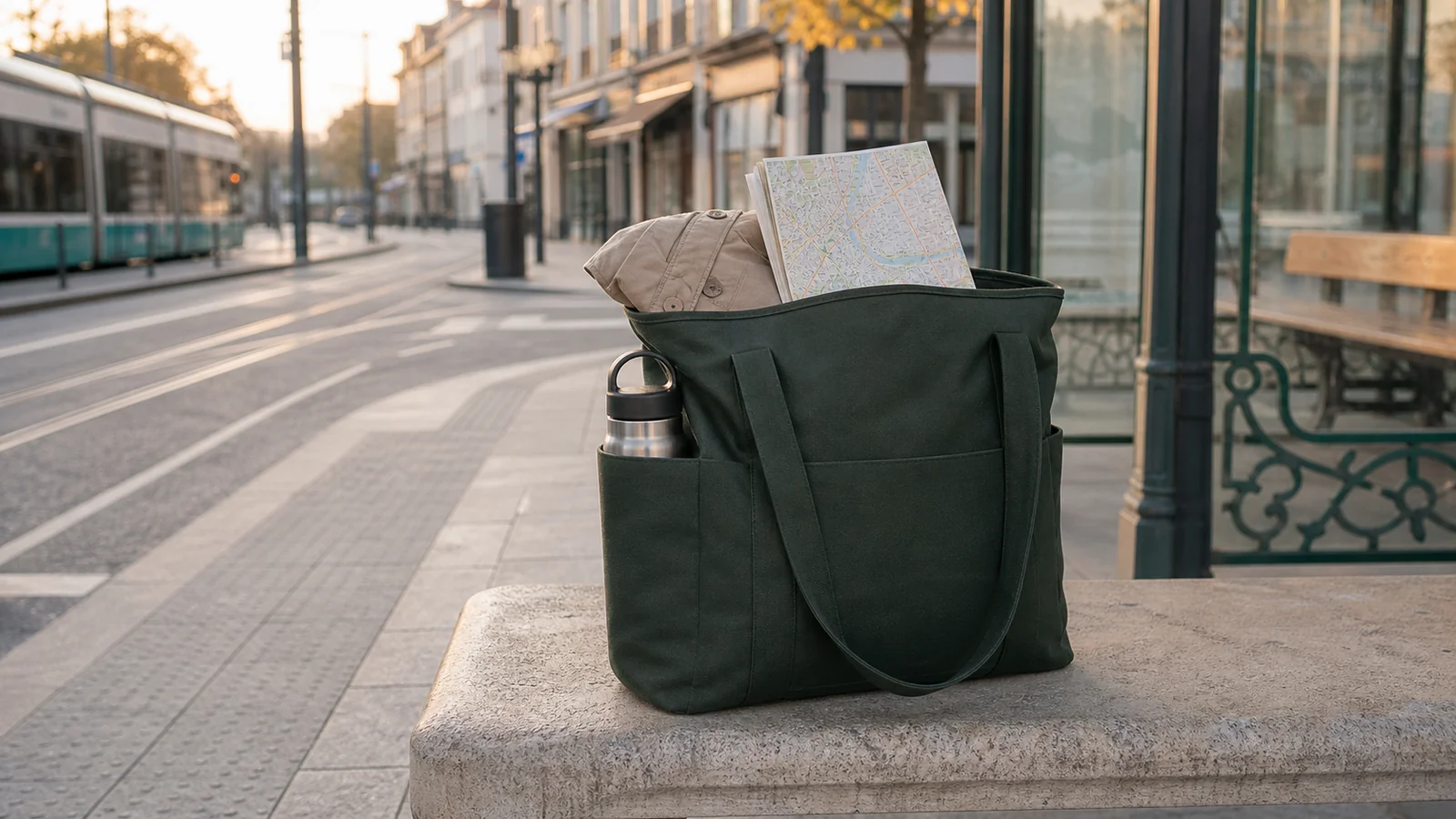
A Travel Tote Is Useful Only If It Matches the Day
A travel tote can be the easiest bag in the world or the one you regret carrying after three subway transfers. The shape is simple: open top or zip top, shoulder straps, one main compartment, and enough room for the things you want close. That simplicity is the appeal. It is also the risk.
The best travel tote is not just roomy. It is secure enough for transit, comfortable enough for walking, structured enough to find your passport, and small enough to fit under an airplane seat when you need it to.
For slow city travel, we judge a tote by movement. Can you carry it through a market without holding it shut? Can you slide it under a cafe table? Can you find your transit card with one hand? Can you walk ten blocks without one shoulder begging for mercy?
When a Travel Tote Makes Sense
A tote works well when access matters more than load balance. It is easy to reach into, easy to set beside you, and often looks more natural in a city than a technical travel backpack.
It can be a good choice for:
- A personal item on a flight
- A day bag for museums, cafes, and light shopping
- A laptop-and-notebook bag for work mornings
- A second bag with a roller suitcase
- A soft market or beach bag
- A simple overnight bag for one light change of clothes
- A neighborhood wandering bag when you do not need hiking support
A tote is less ideal when the day is long, hot, crowded, or heavy. One-shoulder carry gets tiring. Open tops are risky in busy stations. Soft sides can slump. A laptop can dig into your hip. If your trip includes long walks with weight, a backpack may be kinder.
Travel Tote vs Backpack vs Crossbody
Think about the body mechanics before the aesthetics.
| Bag type | Best for | Watch out for |
|---|---|---|
| Travel tote | Easy access, laptop days, flights, cafe stops | One-shoulder strain, security, poor structure |
| Backpack | Longer walking days, heavier loads, hands-free transit | Harder to access quickly, can feel bulky indoors |
| Crossbody | Essentials, security, museums, short walks | Limited capacity, strap pressure |
| Small duffel | Overnight trips, car travel, gym-style packing | Awkward in tight transit and under seats |
| Sling | Minimal daily carry | Not enough room for layers or laptop |
For many city trips, the calmest setup is a small crossbody for valuables plus a tote for layers, notebook, snacks, and soft extras. That way your passport, wallet, and phone are not floating in a deep main compartment.
If you know you prefer backpack carry, our guide to budget travel backpacks gives a more balanced frame for load, straps, compartments, and cabin use.
Size: The Personal Item Question
Many travelers want a tote that works as an airplane personal item. That means it should fit under the seat in front of you, not just look cabin-friendly in a product photo.
Airline rules vary by carrier, route, fare class, and aircraft. Some U.S. airlines allow personal items around 18 x 14 x 8 inches. United lists a personal item limit of 9 x 10 x 17 inches. Budget carriers can be stricter, and soft bags can become oversized when overpacked.
Use these practical checks:
- Check your airline’s current personal item dimensions before flying.
- Measure the tote when full, not flat.
- Avoid rigid bases that exceed the limit.
- Leave room for the bag to compress slightly.
- Do not count on overstuffed side pockets fitting under a seat.
- Keep anything you need during the flight near the top.
A tote with a neat rectangular shape may fit better than a taller slouchy bag, even if both claim similar capacity. The underseat test is about real packed dimensions.
The Features That Matter Most
Travel totes can look similar online. Small design choices decide whether the bag feels calm or chaotic.
A Real Closure
For travel, a zipper is usually better than an open top. A snap is better than nothing but still leaves gaps. A zip-top tote protects your things in overhead bins, under seats, taxis, crowded metros, and sudden rain.
Open totes can work in calm places, but they require more attention. If you use one, pair it with zip pouches and keep valuables in a smaller crossbody.
Comfortable Straps
Strap comfort matters more than capacity. If the straps are too thin, too short, too slippery, or too stiff, the tote becomes irritating fast.
Look for:
- Enough drop length to fit over a jacket
- Straps that stay on your shoulder
- Soft edges that do not cut into skin
- Reinforced stitching
- Optional crossbody strap for lighter loads
- Good balance when the bag is half full
Try loading the tote with a laptop and water bottle, then walk around your home for ten minutes. If it annoys you there, it will annoy you more in a train station.
A Trolley Sleeve
A trolley sleeve lets the tote slide over a roller suitcase handle. It is not essential, but it is very useful for airport corridors, hotel lobbies, and long station walks.
Check that the sleeve fits your suitcase handle and holds the tote securely. Some sleeves are too loose, causing the bag to twist while you walk.
Laptop Protection
If you carry a laptop, a padded sleeve helps. It should hold the computer upright, keep it from banging against a water bottle, and make it easy to remove at security if needed.
If the tote has no laptop sleeve, use a separate padded case. Do not let a bare laptop sit at the bottom of a soft tote with keys, chargers, and a metal water bottle.
Interior Organization
A travel tote does not need twenty pockets. It does need enough organization to stop the deep-bag search.
Helpful pockets include:
- One secure zip pocket for passport or wallet
- One easy phone pocket
- One laptop or tablet sleeve
- Two small pockets for lip balm, earbuds, or transit card
- A place for a pen
- Optional water bottle holder
Too many small pockets can also backfire. If you forget where things are, the organization is not helping.
Material Choices: Nylon, Canvas, Leather, or Recycled Fabric
Material changes weight, weather resistance, structure, and mood.
| Material | Strengths | Tradeoffs |
|---|---|---|
| Nylon | Light, often water-resistant, easy to clean | Can look sporty or wrinkle |
| Canvas | Durable, casual, sturdy | Can get heavy and hold moisture |
| Leather | Polished, structured, long-lasting | Heavy, expensive, water-sensitive |
| Recycled polyester | Light, practical, common in travel bags | Quality varies by brand |
| Waxed fabric | Weather-resistant, character over time | Can mark clothing or feel stiff |
For city travel, lightweight nylon or recycled polyester often makes the most sense. Leather can be beautiful for work travel, but a heavy leather tote plus laptop, bottle, and charger can become a shoulder problem.
Canvas is good for slow weekends, road trips, and market days. It is less fun when wet, packed full, or carried all afternoon.
Security in Crowded Cities
A tote is not automatically unsafe, but it asks for smarter habits.
Use a travel tote more carefully in:
- Busy train stations
- Night markets
- Packed metros
- Outdoor dining areas
- Airport boarding lines
- Museum queues
- Sidewalk cafes
Choose a zip top if you will spend time in crowds. Keep the zipper facing inward when possible. Do not leave the tote hanging open behind you on a chair. Put passport, wallet, and phone in an interior zip pocket or separate crossbody, not loose at the top.
For the most crowded days, a tote may be your secondary bag, not your valuables bag. Let it carry a scarf, book, snack, and sweater. Keep identity documents closer to your body.
What to Pack in a Travel Tote
A good tote layout is about layers.
For a flight, pack:
- Passport or ID
- Wallet and phone
- Small liquids pouch if needed
- Medication
- Chargers and power bank
- Headphones
- Light layer
- E-reader or book
- Snacks
- Empty water bottle
- Glasses or sunglasses
- One emergency clothing item, if your main bag might be gate-checked
For a city day, pack:
- Small crossbody or wallet pouch
- Phone and transit card
- Light layer
- Refillable bottle
- Compact umbrella or hat
- Notebook or guide
- Small snack
- Portable charger
- Any tickets or reservation notes
The mistake is using the tote as a bag-shaped drawer. If everything goes in loose, the tote gets heavier, messier, and slower every hour.
How to Organize a Tote Without Overdoing It
Use pouches by purpose, not by perfection.
Try:
- One tech pouch for charger, cable, adapter, and earbuds
- One small health pouch for medication, tissues, and lip balm
- One flat document pouch for passport, boarding pass, and paper notes
- One reusable foldable bag for market overflow
For international trips, keep the liquids pouch easy to reach if your airport still asks travelers to remove it. Security procedures vary by airport and scanner type, so pack in a way that can adapt.
Our guide to what a travel adapter does can help you keep the tech pouch realistic. A tote gets messy fast when every cable and plug shape is loose.
When Not to Use a Travel Tote
Skip the tote, or use it only as a secondary bag, when:
- You will walk long distances with heavy gear.
- You have shoulder, neck, or back sensitivity.
- You are carrying camera equipment.
- You will be in very crowded areas with valuables.
- You need both hands free for children or stairs.
- You expect rain and the tote is not weather-resistant.
- You are taking a budget flight with a strict personal item limit.
- You tend to overpack any open space.
There is no shame in choosing a backpack. A good travel bag is the one that makes the day easier, not the one that looks best in a packing photo.
How We Would Choose One
For most independent city travelers, we would look for a tote with:
- Zip-top closure
- Lightweight water-resistant fabric
- Comfortable shoulder straps
- Trolley sleeve
- Padded laptop sleeve, if needed
- One interior zip pocket
- A shape that fits under the airline seat when packed
- Neutral styling that works in cafes, museums, and transit
- Easy-clean lining
- Weight low enough that the packed bag stays comfortable
We would not chase the largest possible tote. Bigger usually means heavier and easier to overpack. A slightly smaller tote with better structure often feels calmer.
Care and Packing Tips
A tote lasts longer and behaves better when you pack it intentionally.
Before a trip:
- Load it with your real items.
- Walk for ten minutes.
- Try it with your jacket.
- Slide it onto your suitcase handle.
- Put it under a chair to test access.
- Check whether it tips over.
- Remove anything you packed “just in case.”
During the trip, empty receipts and snack wrappers each night. Reset the pouches. Put the passport back in the same pocket every time. This small routine keeps the tote from becoming a soft black hole.
FAQ
Is a tote bag good for travel?
Yes, a tote can be excellent for flights, cafes, light city days, and travel with a roller bag. It is less ideal for heavy loads, long walks, or crowded places without a zipper.
Can a travel tote count as a personal item?
Often, yes, if it fits your airline’s current personal item size and can go under the seat in front of you. Measure the tote when packed, not empty.
Should a travel tote have a zipper?
For most trips, yes. A zipper helps in airports, transit, crowded streets, and overhead bins. Open totes are better for calm local use or as secondary bags.
Is a tote better than a backpack for city travel?
It depends on the day. A tote is easier to access and can look more natural indoors. A backpack is better for heavier loads and longer walks.
What size travel tote is best?
Choose the smallest tote that fits your real essentials. If you want it as a personal item, compare packed dimensions with your airline’s rules before the flight.
The Bottom Line
A travel tote works when it stays secure, comfortable, and easy to search. Choose a zip-top bag with sensible structure, comfortable straps, and enough organization for the items you reach for most.
For slow city mornings, the right tote is not the biggest one. It is the one that lets you move through airports, trains, cafes, and side streets without thinking about your bag all day.
You might also like
Nuna Travel Stroller: Is It Right for City Trips?
See whether a Nuna travel stroller fits city travel, airport days, transit, naps, luggage, and slow family wandering.
Women's Travel Rucksack: Fit and Packing Guide
Choose a women's travel rucksack by torso fit, hipbelt comfort, carry-on size, access, weight, and realistic city use.
Travel LED Lights: How to Pick One for Better Trips
Choose a travel LED light by use case, brightness, battery rules, and packing weight so it earns space in your bag.