Travel LED Lights: How to Pick One for Better Trips
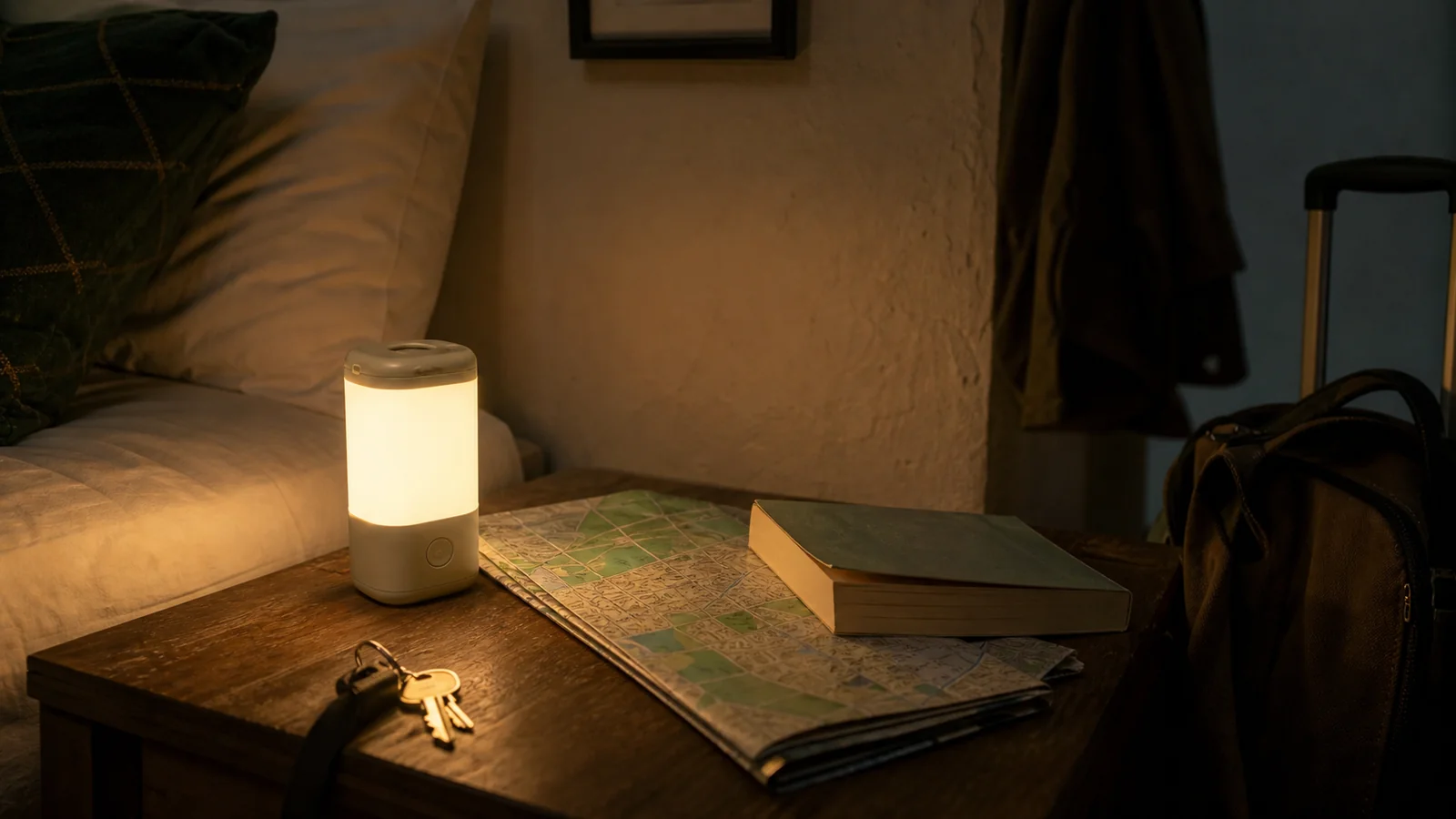
A Travel LED Light Should Solve a Real Trip Problem
A travel LED light is worth packing only when it fixes something your phone flashlight does badly. Maybe you read in dim guesthouse rooms. Maybe you arrive late and need to unpack without waking someone. Maybe you stay in older apartments where the bedside lamp is harsh, missing, or across the room.
We like small travel tools that make a trip calmer without turning your bag into a gear drawer. A light can be useful, but it should have a clear job: reading, finding things in a dark room, lighting a bathroom path, working at a small desk, or adding a little safety during a power outage.
If the light does not beat your phone, headlamp, or existing charger setup, leave it out. If it gives you hands-free, soft, reliable light in a room you do not control, it can be one of those quiet items you appreciate every night.
The Main Types of Travel LED Lights
Most travel LED lights fall into a few useful groups. The best choice depends less on the brightest spec and more on how you actually move through a city.
| Type | Best for | Watch out for |
|---|---|---|
| Clip-on reading light | Books, bunks, night trains, shared rooms | Too narrow for desk work |
| Small lantern | Hotel rooms, rentals, power cuts, bathrooms | Can be bulky if it has a large diffuser |
| USB plug-in light | Laptop work, power banks, compact packing | Needs a USB port or power bank |
| Headlamp | Early departures, alleys, trails, hands-free tasks | Looks awkward in restaurants or hotels |
| Motion night light | Bathroom routes and unfamiliar rooms | Needs placement space and may turn on too often |
For slow city travel, the most useful options are usually a clip-on light or a palm-size lantern. They work indoors, do not ask much of your bag, and feel less intense than a headlamp in a hotel or apartment.
How Much Brightness Do You Need?
Brightness is usually described in lumens. More lumens are not always better. A light that is too bright can bounce off white walls, bother a travel partner, or make a small room feel clinical. The Department of Energy notes that LEDs are efficient and directional, which is exactly why a small light can feel stronger than its size suggests.
Use these rough ranges:
| Use case | Sensible brightness |
|---|---|
| Reading in bed | 20 to 80 lumens |
| Finding items in a bag | 50 to 150 lumens |
| Lighting a small bathroom route | 20 to 100 lumens |
| Desk work in a dark room | 100 to 300 lumens |
| Emergency room light | 150 to 500 lumens |
A dimmable light is better than a very bright fixed light. Low mode matters most when you are half awake, sharing a room, or trying not to make a hotel room feel like an office at midnight.
Warm Light Is Usually Better for Rooms
Color temperature matters. Warm light feels softer and more natural in a bedroom. Cooler light can help with focused work, but it often feels harsh in a small hotel room. If a product lists color temperature, look for a warm setting around 2700K to 3000K for reading and settling in.
A two-color or three-color light can be useful if you work from the road. Warm light helps at night. Neutral light is better for sorting documents, checking a stain, or packing before dawn. Very cool white light is rarely relaxing, so do not make that your only mode unless the light is strictly for tasks.
Also check beam shape. A tiny spotlight is fine for a paperback, but annoying for a whole room. A diffused lantern is better for a bedside table. A flexible neck works well when the outlet, bed, and desk are never where you expect them to be.
Battery and Charging Details to Check
Travel LED lights are often rechargeable. That can be convenient, but it adds one more battery-powered item to your packing list. Before you choose one, check the charging port, cable type, battery life, and whether it works while charging.
USB-C is the easiest fit if your phone, earbuds, and power bank already use it. Micro-USB still appears on cheaper lights, but it may force you to carry a cable you otherwise do not need. Replaceable AAA batteries can be useful in remote places, but for city trips they usually add more loose bits than they solve.
For flights, battery rules matter. FAA guidance says devices containing lithium batteries should be carried in carry-on baggage when possible, and spare lithium batteries are not allowed in checked baggage. If your light has a built-in lithium battery, pack it where it will not switch on by accident, and keep any spare batteries protected from damage or short circuit.
If you already carry a power bank, read our guide to what a travel adapter does so you do not confuse plug shape with power conversion. A light may charge from USB, but the wall setup still depends on your destination and charger.
Size, Weight, and Packing Shape
The best travel LED light is the one you can pack without thinking about it. Look beyond the listed weight and ask how the shape behaves in a real bag.
A flat clip-on light slides into a pouch. A small lantern may need a side pocket. A bendable gooseneck can snag on cables unless it has a case or folds tightly. A headlamp is compact, but the strap can tangle with chargers, masks, and laundry bags.
Before you add any light, decide where it will live:
- In your tech pouch with chargers
- In a bedside pouch or toiletry kit
- In an outside pocket for late arrivals
- In a day bag if you expect dark walks or early trains
If your packing style is already tight, compare the light with something you would remove. A dedicated light should beat a second charging cable, a paperback light, or a heavier flashlight. For more packing tradeoffs, see our guide to budget travel backpacks.
When a Phone Flashlight Is Enough
You do not always need a separate travel LED. Your phone flashlight is enough for short trips, simple hotels, and moments when you only need quick light. It is also one less item to charge.
A separate light earns its place when you need one of these benefits:
- Hands-free use while packing or reading
- Softer light that will not wake someone
- A stable light source during a power cut
- Longer runtime than your phone can spare
- A light you can place across the room
The key is not owning more gear. It is protecting the small routines that make travel easier: reading for ten minutes, finding medication, sorting a bag before sunrise, or walking to a bathroom without turning on overhead lights.
Features That Matter More Than Brand Names
Brand names change, and small electronics often look similar online. Focus on features you can verify from the listing and user photos.
Look for:
- At least two brightness levels
- A warm or adjustable color temperature
- A stable base, clip, magnet, or hook
- A charging port that matches your other gear
- A clear battery indicator
- A physical switch that is hard to trigger by accident
- Enough runtime for several evenings, not just one bright hour
Be cautious with vague claims like “super bright” or “all-night battery” when the listing gives no lumen range, battery capacity, or runtime by mode. Also avoid lights with loud flashing modes if you only need room lighting. Emergency strobe features are useful for some outdoor travel, but they are usually unnecessary for city hotels and apartments.
Our Practical Pick for Most City Trips
For most independent travelers, the best travel LED light is a small rechargeable lantern or clip-on lamp with warm dimming, USB-C charging, and a stable way to stand or clip near a bed. It should be bright enough to unpack a bag, soft enough for shared rooms, and small enough to fit in a tech pouch.
Choose a clip-on light if you mainly read, travel by train, or stay in hostels. Choose a tiny lantern if you rent apartments, arrive late, or want soft room light that can sit on a table. Choose a headlamp only if your trip includes dark outdoor walks, early trailheads, camping, or hands-free tasks beyond the room.
If you cannot name the moment when you would use it, skip it. If you can picture the exact night it would help, pack the smallest version that does that job well.
FAQ
Are travel LED lights allowed on planes?
Most small LED lights are allowed, but battery type matters. If the light contains a lithium battery, keep it in carry-on baggage when possible and protect it from accidental activation. Spare lithium batteries belong in carry-on baggage, not checked luggage.
Is a rechargeable travel LED better than battery powered?
For city trips, rechargeable is usually easier if it uses the same cable as your phone or power bank. Replaceable batteries can be useful in remote areas, but they add loose parts and may be harder to manage on short urban trips.
How bright should a travel LED light be for a hotel room?
Look for dimming rather than maximum brightness. Around 20 to 80 lumens works for reading, while 100 to 300 lumens can help with desk work or unpacking. A low mode is often more useful than a very bright high mode.
What color light is best for travel?
Warm white light is best for bedtime, reading, and hotel rooms. Neutral white is useful for desk tasks and packing. Very cool white can feel harsh at night, so it is better as an optional mode than the only setting.
Can I use a travel LED light instead of a headlamp?
Yes, if most of your use is indoors. A clip-on light or small lantern is easier to use in a hotel room. A headlamp is better when you need hands-free light outdoors, on dark paths, or during early departures.
The Bottom Line
A travel LED light is not essential for every bag. It becomes useful when it makes unfamiliar rooms easier to live in. Pick one with warm dimming, a simple charging setup, and a shape that fits your actual packing system. Then let it do one quiet job well.
You might also like
Nuna Travel Stroller: Is It Right for City Trips?
See whether a Nuna travel stroller fits city travel, airport days, transit, naps, luggage, and slow family wandering.
Travel Tote: How to Choose One That Works
Choose a travel tote by size, zipper, laptop space, underseat fit, strap comfort, and how you move through a city.
Travel Router: Is It Worth Packing for Wi-Fi?
Decide if a travel router fits your trip by checking hotel Wi-Fi, VPN needs, device limits, setup effort, and alternatives.