Travel Insurance for Baggage Loss: What to Check
Baggage Coverage Is Useful, but It Is Not Magic
Travel insurance for baggage loss sounds simple until a suitcase misses the belt. Then you discover that several systems may overlap: the airline’s baggage responsibility, the travel insurance policy, a credit card benefit, and sometimes homeowner’s or renter’s insurance. Each one has limits, deadlines, exclusions, and paperwork.
For slow city travel, baggage coverage is less about panic and more about keeping an arrival day from collapsing. If your checked bag is delayed, you may need toiletries, a change of clothes, medication backups, chargers, or weather layers before the airline finds it. If the bag is declared lost, you need a practical way to document what was inside without turning the claim into a second trip.
The most useful question is not “Does this policy mention baggage?” It is “What would this coverage actually pay for, after the airline and card benefits have had their say?”
Start With the Three Baggage Problems
Policies often separate baggage trouble into delay, loss, and damage. They feel related, but claims work differently.
| Problem | What it usually means | What to check |
|---|---|---|
| Delayed baggage | Your bag did not arrive with you but may still be found | Waiting period, daily limit, eligible essentials, receipt rules |
| Lost baggage | The airline or carrier declares the bag lost after a search period | Per-person limit, item limits, depreciation, proof of ownership |
| Damaged baggage | The bag or contents arrive broken while under carrier control | Airline report deadline, repair rules, excluded wear and tear |
Delay coverage helps with short-term essentials. Loss coverage helps replace the bag and covered contents. Damage coverage may repair or replace a suitcase, but ordinary scuffs and old damage are not usually the point.
Do not assume one strong number on a policy solves every problem. A plan may show a decent baggage loss limit but a much smaller baggage delay limit. Another may cover delay after six hours, while a cheaper plan may not trigger until a longer wait.
Airline Responsibility Comes First
When a checked bag is lost, delayed, or damaged during air travel, the airline is usually the first place to file. In the United States, Department of Transportation guidance says airlines must compensate passengers for reasonable, verifiable, actual incidental expenses from delayed bags, subject to legal liability limits. Airlines also have responsibility for lost and damaged baggage when the issue happens under their control.
That does not mean every claim is simple. Airlines may require proof, apply depreciation, exclude certain packed items on domestic trips, or ask for a formal mishandled baggage report. For most domestic U.S. flights, the current maximum baggage liability is listed at $4,700 per passenger. For many international flights covered by the Montreal Convention, the limit is expressed in Special Drawing Rights and converted into local currency.
Use those limits as a ceiling, not a promise. You still need to show what happened and what the lost or delayed items were worth.
For slow travelers, this is one reason to keep your first evening flexible after a flight. A missing bag can mean a service desk, a delivery address, a pharmacy stop, and a receipt folder before you ever reach dinner.
Where Travel Insurance Fits
Baggage loss or delay coverage in travel insurance is often secondary. That means the insurer may expect you to file with the airline or common carrier first, then use the policy for eligible gaps. This is not always bad. It can still help when the airline payment is slow, limited, or does not cover everything the policy covers.
Look closely at these parts of the plan:
- Baggage loss limit per person
- Baggage delay limit per person or per day
- Waiting period before delay benefits begin
- Whether coverage is primary or secondary
- Special limits for jewelry, electronics, cameras, and documents
- Exclusions for unattended bags or improperly packed items
- Proof required for higher-value belongings
- Deadline to notify the insurer
A policy that looks generous at first glance may have small sublimits for the items you actually pack. If you travel with camera gear, formal clothing, medical equipment, or work devices, the fine print matters more than the headline benefit.
Credit Card Coverage Can Fill Some Gaps
Some travel credit cards include baggage delay insurance, lost luggage reimbursement, or both. The details vary by card and can change, so read the card’s benefit guide before relying on it.
Common card rules include:
- You must pay for some or all of the fare with the eligible card or its rewards.
- Immediate family may or may not be covered.
- Delay coverage may start only after a set number of hours.
- Reimbursement may be capped per day and per trip.
- The benefit administrator may ask for the airline report, receipts, itinerary, and proof of payment.
- Certain items, such as cash, tickets, jewelry, electronics, or hearing aids, may be excluded or limited.
The card benefit is useful when it matches your actual trip. It is weaker if you booked with another card, used mixed payment methods, packed expensive excluded items, or need a faster claim than the card process can provide.
If you already carry a card with travel protection, compare it before buying a separate policy. You may decide the card is enough for a short domestic city break, but not enough for a multi-country trip with checked luggage and prepaid plans.
What Baggage Insurance Usually Covers
Most useful baggage coverage focuses on practical, documented losses. For delayed bags, that often means necessary items bought while you wait. For lost bags, it means the depreciated or actual cash value of covered items, up to the plan limit.
Reasonable delay purchases may include:
- Toiletries
- Basic clothing
- Underwear and socks
- Phone charger or simple travel adapter
- Weather layer if the destination requires it
- Essential baby or child items
- Basic replacement shoes if needed for the trip
Keep purchases sensible. A delayed bag is not a blank check for a full new wardrobe. Think like a claims reviewer: would this expense look necessary for the trip, destination, and delay length?
Our guide to what a travel adapter does is useful here because chargers and plug adapters are small enough to keep in a personal item. The cheapest claim is the one you never need to make.
What Is Often Limited or Excluded
The hardest baggage claims usually involve high-value or hard-to-prove items. Airlines, insurers, and card benefits often limit or exclude categories that travelers casually pack in checked bags.
Be careful with:
- Cash and credit cards
- Passports and visas
- Jewelry and watches
- Cameras and lenses
- Laptops and tablets
- Prescription medicine
- Hearing aids and medical devices
- Business documents
- Fragile souvenirs
- Perishable goods
- Irreplaceable personal items
Some of these may have separate rules, especially assistive devices or medical equipment. Still, the safer travel habit is simple: keep critical, expensive, and irreplaceable items in your personal item whenever allowed.
If your route forces a gate-check, move valuables before handing the bag over. A soft personal item with documents, medicine, cards, and one overnight layer can save a trip when the larger bag goes missing.
How to Compare Policies Before You Buy
Do not compare travel insurance for baggage loss by the biggest number alone. Compare the trip scenario.
| Trip style | Baggage risk | Better coverage question |
|---|---|---|
| Carry-on-only city break | Gate-check or theft risk | Does my card cover forced checked bags or theft? |
| Checked suitcase to one city | Delay and lost-bag risk | How soon does delay coverage start, and what proof is needed? |
| Multi-city rail and flight trip | More handoffs and hotel changes | Can I give changing delivery addresses and still claim essentials? |
| Cruise or tour start | Delay could affect formal or activity clothing | Does the policy cover necessary replacement items quickly enough? |
| Gear-heavy trip | High-value contents | Are electronics, cameras, sports gear, or special items limited? |
For Mapless Mornings readers, the most common useful setup is modest but clear: airline responsibility first, a card or policy that covers delay essentials, and a packing system that keeps the truly important things out of checked luggage.
If you are still choosing the bag itself, our budget travel backpack guide can help you decide what belongs in the cabin instead of the hold.
Documents to Save Before and During the Trip
Baggage claims are paperwork problems. You do not need a legal binder, but you do need enough proof to make the claim boring.
Before travel, save:
- Flight itinerary and ticket receipts
- Checked bag fee receipt
- Travel insurance certificate and full policy
- Credit card benefit guide, if relevant
- Photos of the suitcase exterior
- Photos of packed contents if the bag carries valuable items
- Receipts for expensive items you are packing
- Serial numbers for electronics you cannot avoid checking
During the trip, save:
- Baggage tag receipts
- Airline mishandled baggage report
- Claim or file reference number
- Names or timestamps from service desk conversations
- Delivery updates
- Receipts for replacement essentials
- Photos of damage before repair
- Written denial or settlement letters
Store copies offline. Airport Wi-Fi, roaming issues, and low battery are bad partners when you are standing at a baggage desk.
What to Do When Your Bag Does Not Arrive
Do not leave the airport assuming the bag will sort itself out. It might, but you still need the record.
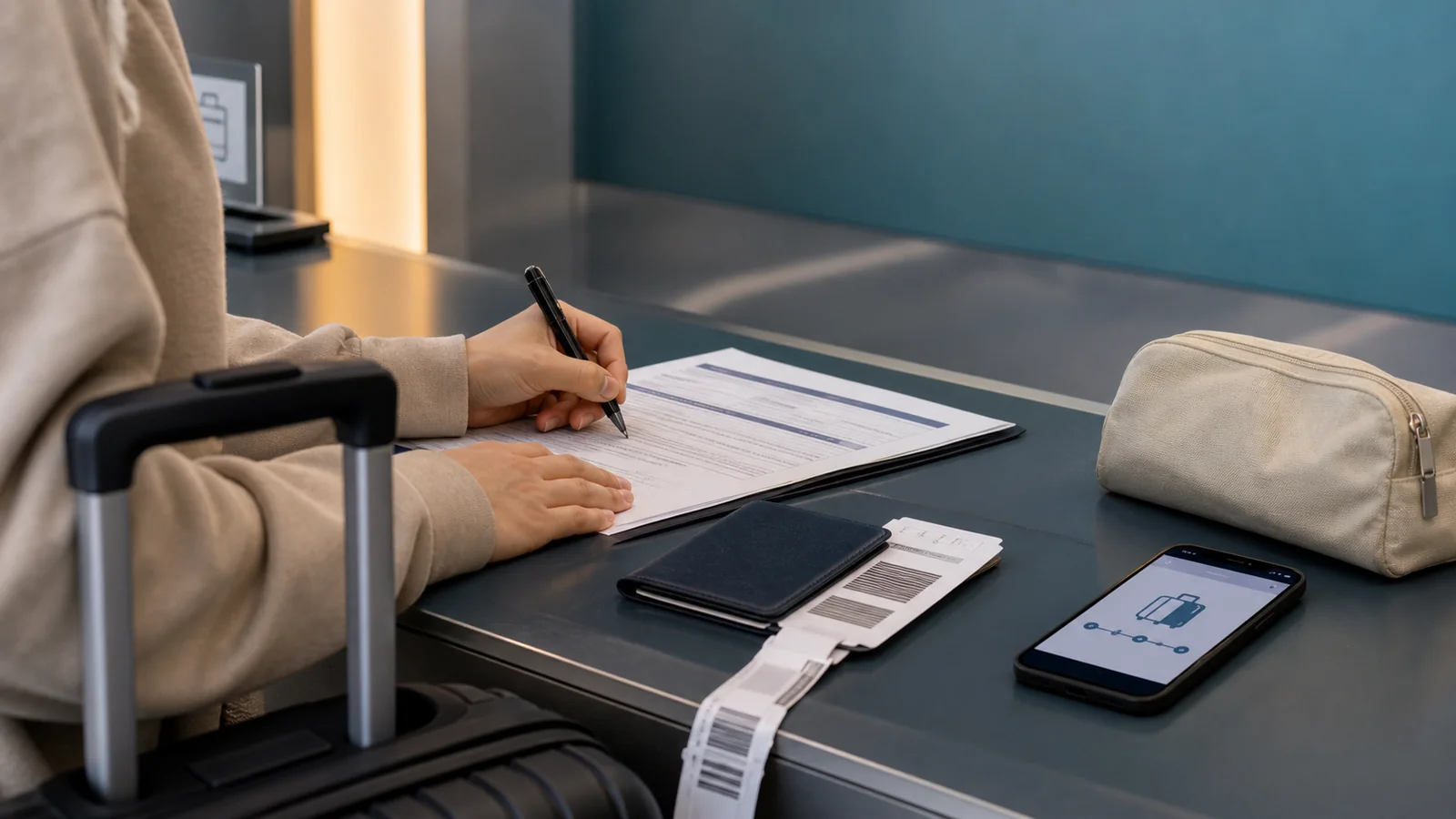
- Go to the airline baggage service desk before leaving the airport.
- File a mishandled baggage report and get the reference number.
- Confirm the delivery address, phone number, and email.
- Ask how the airline defines delay, loss, and next steps.
- Keep your baggage tag and boarding pass.
- Photograph any damaged bag or opened contents immediately.
- Buy only reasonable essentials and keep itemized receipts.
- Contact your insurer or card benefit administrator if the delay meets the waiting period.
- Track every conversation and uploaded document.
- Follow up before deadlines pass.
For delayed baggage, note when the bag was delivered or made available for pickup. That time may matter for airline refunds, insurance waiting periods, and card benefit rules.
How Much Coverage Is Enough?
Start with your real checked bag value, then reduce the risk by moving critical items into your personal item.
A practical checked suitcase might contain clothes, shoes, toiletries, a rain shell, and a spare sweater. That is annoying to lose, but not catastrophic if you can document the items and replace the basics. A riskier checked bag contains laptops, camera lenses, medication, jewelry, work papers, or one-of-a-kind items. Insurance may not solve that.
Use this quick test:
- Could I replace the contents near my destination within one day?
- Would I have receipts or photos for anything expensive?
- Would a lost bag ruin the purpose of the trip?
- Am I checking items that the airline or policy may exclude?
- Do I already have card coverage that applies to this ticket?
- Is the policy’s baggage delay waiting period useful for my itinerary?
If the answer points to high risk, change the packing before you buy more coverage. A smaller cabin bag, a better personal item, or a cleaner document system can be more useful than a policy with confusing exclusions.
Slow Travel Packing Strategy for Baggage Loss
The best baggage insurance plan is paired with a bag that can fail gracefully. That means you can lose the checked suitcase for a day or two and still sleep, wash, charge, communicate, and move around the city.
Pack your personal item with:
- Passport or ID
- Wallet and backup payment card
- Medication and medical basics
- Phone, charger, and power bank
- One simple toiletries kit that meets security rules
- Spare underwear and socks
- Light layer or scarf
- Copies of insurance and airline details
- Essential glasses or contacts
- House keys and final-return necessities
This is not glamorous packing. It is arrival-day insurance. If your checked suitcase catches up later, great. If it does not, you can still take the tram, find your room, and make decisions after breakfast instead of from a service desk haze.
When Separate Baggage Coverage May Be Worth It
Separate travel insurance may make sense when your trip has more than ordinary baggage risk. It can also come bundled with trip cancellation, interruption, medical, and delay benefits, so baggage is only one part of the decision.
Consider it more seriously when:
- You are checking a suitcase on a long international route.
- Your trip includes tight connections or multiple carriers.
- You are carrying destination-specific clothing or gear.
- A cruise, tour, wedding, or formal event starts soon after arrival.
- Your credit card benefit is weak, unclear, or does not apply.
- You want one claims contact for several trip problems.
It may matter less when:
- You are traveling carry-on only.
- The trip is short and easy to adjust.
- Your checked bag contains only replaceable clothing.
- Your card benefit already covers the likely delay scenario.
- You have strong airline status or direct support, though status is never a guarantee.
The right answer can be mixed. You might rely on the airline and card for a weekend flight, then buy a broader policy for a longer route with checked luggage and prepaid plans.
Common Mistakes to Avoid
Most baggage claim problems start before the bag goes missing.
Avoid these:
- Packing valuables in checked luggage because “it is insured.”
- Leaving the airport without a baggage report.
- Throwing away bag tags after check-in.
- Buying replacement items without receipts.
- Assuming credit card coverage applies when you paid with another card.
- Missing the airline, insurer, or card deadline.
- Forgetting that loss claims may use depreciation.
- Treating baggage delay and baggage loss as the same benefit.
- Checking policy summaries but not the actual certificate.
- Overpacking so the lost bag is more valuable than it needs to be.
One more quiet mistake is changing hotels without updating the airline. If you are moving through a city slowly, give the airline the next reliable delivery address and keep checking the tracking record.
FAQ
Does travel insurance cover baggage loss?
Many comprehensive travel insurance policies include baggage loss or personal effects coverage, but limits and exclusions vary. Some coverage is secondary, which means you may need to file with the airline first.
Is baggage delay the same as baggage loss?
No. Baggage delay coverage usually helps with reasonable essentials while you wait for the bag. Baggage loss coverage applies when the bag is declared lost and may reimburse covered contents up to policy limits.
Do airlines pay for lost luggage?
Airlines are responsible for lost, delayed, or damaged checked baggage within legal limits, but they can require proof and may apply depreciation or exclusions. File a report with the airline as soon as possible.
Does a credit card cover lost luggage?
Some travel credit cards include lost luggage reimbursement or baggage delay insurance. You usually need to pay for the fare with the eligible card or rewards tied to that card, and you must follow the benefit guide.
Should I buy travel insurance only for baggage loss?
Usually, baggage coverage is one part of a broader travel insurance decision. Buy separate coverage if the full policy fits your trip risks, not just because you are worried about a suitcase.
The Bottom Line
Travel insurance for baggage loss is worth reviewing before you check a bag, but it should not be your only plan. Airline responsibility, credit card benefits, and travel insurance can work together, yet each one asks for proof and each one has limits.
Keep valuables and essentials with you. Photograph the bag, save the tags, read the benefit guide, and know who you file with first. A missing suitcase is still frustrating, but a calm paper trail keeps it from taking over the whole trip.
You might also like

Travel Tote: How to Choose One That Works
Choose a travel tote by size, zipper, laptop space, underseat fit, strap comfort, and how you move through a city.
Travel Router: Is It Worth Packing for Wi-Fi?
Decide if a travel router fits your trip by checking hotel Wi-Fi, VPN needs, device limits, setup effort, and alternatives.

Mr. Fuel Travel Center: Road Stop Guide
Use Mr. Fuel Travel Center listings wisely by checking services, parking, food, timing, app details, and route fit.