Travel Backpack for Women: Fit Comes First
The Best Travel Backpack for Women Is the One That Fits Your Body and Route
A good travel backpack for women is not just a smaller bag in a softer color. The useful differences are fit, carry comfort, pocket layout, and how the pack behaves when you move through train stations, apartment stairs, airport lines, and uneven sidewalks.
For slow city travel, the bag needs to do three jobs well. It should carry your clothes and daily basics, fit the transportation rules you use most, and stay comfortable enough that the walk from station to guesthouse does not ruin the first afternoon.
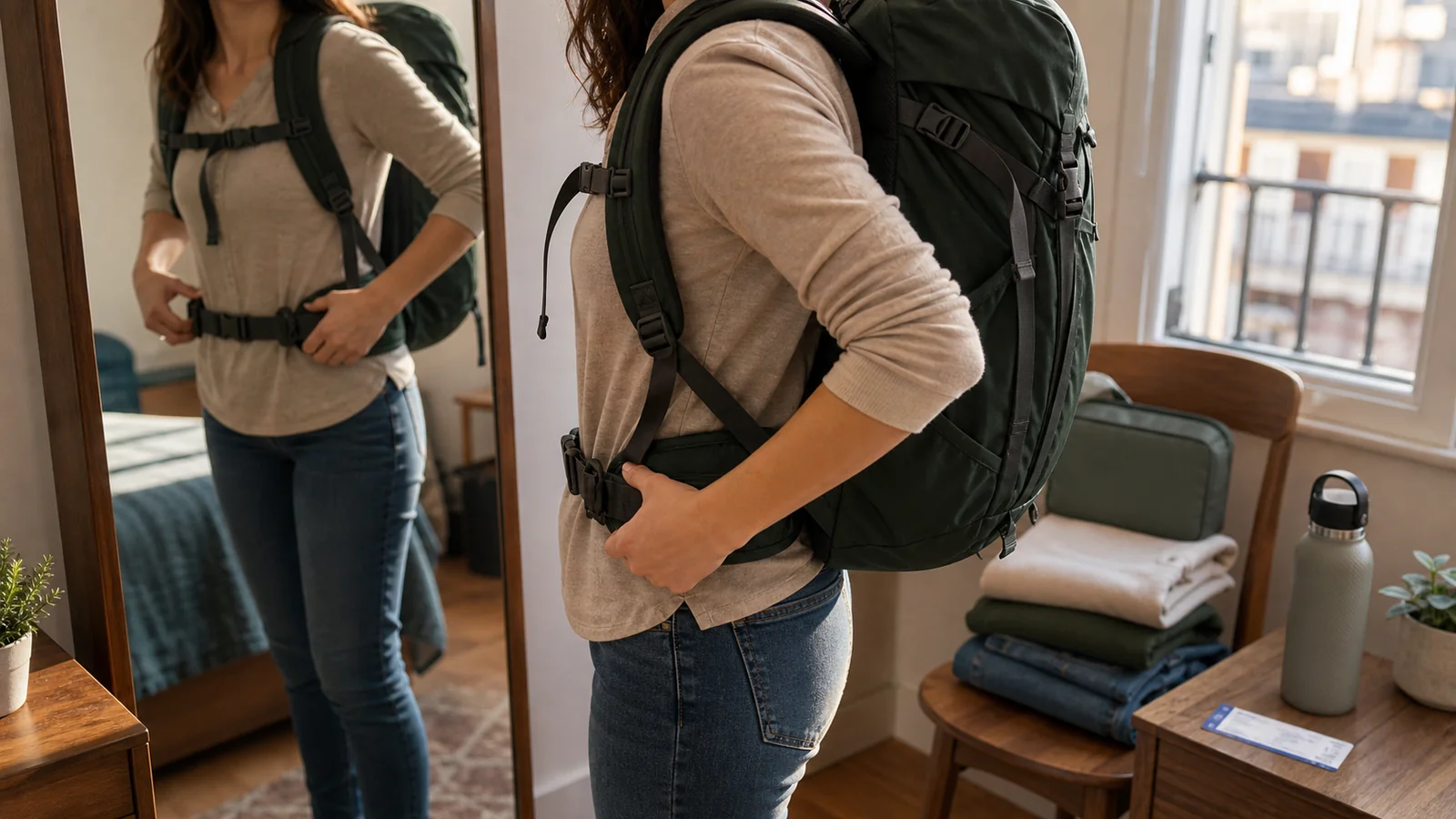
We would choose fit before features. A backpack with clever pockets is still the wrong bag if the shoulder straps rub, the hip belt sits too low, or the back panel is too long for your torso.
Quick Picks by Travel Style
Use this as a starting point before you compare specific models.
| Best for | Capacity to consider | What matters most |
|---|---|---|
| Weekend city breaks | 24-32 liters | Low weight, personal-item potential, easy access |
| One-bag travel | 35-40 liters | Torso fit, hip belt, clamshell opening |
| Laptop and work trips | 25-35 liters | Protected laptop sleeve, balanced weight |
| Petite travelers | 22-35 liters | Shorter torso length, narrower straps, lighter frame |
| Budget trips | 28-40 liters | Simple layout, durable zippers, realistic airline fit |
| Long walking transfers | 30-40 liters | Load lifters, sternum strap, supportive hip belt |
Capacity is only part of the answer. A 35-liter pack with a good harness may feel better than a 28-liter pack with stiff straps in the wrong place.
Best Overall Style: A 35- to 40-Liter Women-Fit Travel Pack
For many travelers, the most flexible choice is a 35- to 40-liter travel backpack with a women-specific or adjustable harness. This size can handle a week or more with laundry, still works for carry-on travel on many airlines, and usually has enough structure to carry comfortably.
Look for:
- Adjustable torso length or a shorter women-specific frame
- S-curved shoulder straps that do not pinch the chest
- A hip belt that lands on the top of your hip bones
- A clamshell or panel opening
- Internal compression straps
- A laptop sleeve if you travel with a computer
This is the category where bags like the Osprey Fairview 40 often appear in comparisons because they are built around travel carry and harness comfort. Always check current dimensions and try the fit if possible, because airline rules and body fit matter more than reputation.
Best Personal-Item Style: A Soft 25- to 30-Liter Backpack
If you fly basic economy, take short city breaks, or dislike overhead-bin stress, a smaller soft backpack may be better. The goal is not maximum capacity. It is a bag that can slide under some seats, compress when half full, and still hold a few days of clothing.
Choose this style if you:
- Travel for two to four nights.
- Pack light layers rather than bulky shoes.
- Want a bag that doubles as a day pack.
- Use low-cost carriers often.
- Prefer a lighter carry over full one-bag capacity.
The tradeoff is space. A 25-liter backpack can be wonderfully easy on arrival, but it punishes overpacking. If you need a laptop, toiletries, jacket, and extra shoes, test the full load before trusting the bag.
For lower-cost options, our guide to budget travel backpacks covers the features that matter when price is part of the decision.
Best for Petite Travelers: Shorter Torso and Lower Weight
Petite travelers often struggle with backpacks that look normal online but sit too low, hit the back of the head, or place the hip belt below the hips. A shorter torso length matters more than total liters.
Check:
- Torso fit range, not just overall height
- Pack weight before you add clothing
- Shoulder strap width and curve
- Whether the sternum strap adjusts high enough
- Whether the hip belt can tighten enough
- Whether the bag looks tall and narrow or squat and boxy
Tall, rigid backpacks can be awkward on smaller frames, especially in train seats and crowded cafes. A slightly smaller bag that fits well may be more useful than a bigger bag you constantly fight.
Best for Curvier Bodies: Strap Shape and Hip Belt Matter
For curvier bodies, shoulder strap shape can decide whether a bag is comfortable. Straight straps may press into the chest or sit too wide. A sternum strap can help, but only if it adjusts to the right height without pulling the shoulder straps into an awkward angle.
Try the backpack loaded, not empty. Walk, bend, reach, and sit down with it. A bag that feels fine for thirty seconds in a store can feel different after fifteen minutes on a platform.
Good signs:
- Shoulder straps lie flat without digging.
- Sternum strap stabilizes without squeezing.
- Hip belt carries some weight without riding up.
- Back panel does not push your head forward.
- The pack does not swing when you turn.
If a brand offers multiple torso sizes or harness versions, use that before assuming one “women’s” label will solve every fit issue.
Best Laptop Travel Backpack: Protection Without Back Strain
A laptop changes the backpack decision because it adds dense weight. The sleeve should hold the computer close to your back, not loose against the outside wall. A suspended sleeve is useful because it keeps the laptop from hitting the floor when you set the bag down.
Look for:
- A padded sleeve close to the back panel
- False bottom or suspended laptop protection
- Charger pocket that does not bulge into clothing space
- Water bottle pocket away from electronics
- Enough structure that the laptop does not bend the bag
For work trips, a 28- to 35-liter bag can be better than a large travel pack. It keeps the laptop easy to reach and avoids overloading your shoulders with clothing you do not need.
Best One-Bag Setup for City Travel
If you want one bag for the whole trip, keep the pack simple. A clamshell opening, packing cubes, one shoe pouch, and a small crossbody bag usually work better than dozens of tiny pockets.
A strong one-bag setup includes:
- Main clothing compartment with compression.
- Protected laptop sleeve if needed.
- Small top pocket for passport, earbuds, and lip balm.
- Exterior bottle pocket that does not steal too much space.
- Lockable zipper pulls or simple security loops.
- A packable day bag or crossbody for wandering after check-in.
Do a real home test. Pack the bag, walk for twenty minutes, climb stairs, and sit with it under a chair. If the bag hurts at home, it will not magically improve in Lisbon, Chicago, Prague, or Montreal.
Women-Specific vs Unisex Backpacks
Women-specific backpacks can be helpful because they often use shorter torso ranges, narrower shoulder spacing, and different strap curves. But the label is not a guarantee. Some women fit unisex packs better. Some men fit women-specific packs better. Body shape beats marketing.
Try both if you can. Compare:
- Where the hip belt lands
- Whether the straps rub your neck or chest
- Whether the pack pulls backward
- Whether the back panel matches your torso
- Whether you can adjust everything while wearing it
The best bag is the one that feels boring after ten minutes. You stop thinking about it, which is exactly the point.
Features Worth Paying For
Not every feature is worth extra money. Focus on the parts that affect every travel day.
Worth prioritizing:
- Comfortable harness
- Durable main zipper
- Clamshell or wide panel opening
- Reasonable empty weight
- Weather-resistant fabric
- Easy-grab handles
- Compression that actually works
Less important:
- Built-in USB ports
- Too many hidden pockets
- Fashion-only details
- Heavy frames for short trips
- Tiny organizer slots you will forget to use
A quiet, well-fitting backpack usually beats a feature-heavy one.
Common Mistakes to Avoid
The most common mistake is buying the largest carry-on backpack you can find. More capacity invites more weight. The second mistake is choosing by aesthetics before fit.
Avoid:
- Ignoring torso length.
- Testing the bag empty only.
- Assuming “women’s” means it will fit.
- Choosing a stiff bag for personal-item travel.
- Packing dense items far from your back.
- Forgetting that airline size limits vary.
- Letting laptop weight sit in an outer pocket.
If you already like rucksack-style bags, our women’s travel rucksack guide looks more closely at that shape and when it works.
FAQ
What size travel backpack is best for women?
For many city trips, 30 to 40 liters is the most flexible range. Go smaller for weekend or personal-item travel. Choose the size after checking torso fit, airline rules, and packed weight.
Are women’s travel backpacks different from unisex backpacks?
Often, yes. Women’s versions may use shorter torso ranges, narrower shoulder spacing, shaped straps, and different hip belt geometry. Fit still varies by body, so try both women-specific and unisex options when possible.
Is a 40-liter backpack too big for women?
Not automatically. A 40-liter backpack can work well if the harness fits and the packed weight is reasonable. It may feel too large for petite travelers, strict personal-item flights, or short trips.
Should a travel backpack have a hip belt?
A hip belt helps on larger or heavier packs because it transfers some weight to your hips. For small personal-item backpacks, a hip belt is less important and may get in the way.
How do I know if a backpack fits?
Load it with real travel weight. The shoulder straps should sit flat, the hip belt should land on the top of your hips, the sternum strap should adjust comfortably, and the bag should not pull you backward.
The Bottom Line
A travel backpack for women should fit your body first and your packing list second. Start with torso length, strap comfort, hip belt position, and realistic capacity. Then compare pockets, laptop storage, and style.
The right bag makes city travel feel lighter because it disappears into the day. You can climb the station stairs, walk to the guesthouse, and still want to wander after dropping your things. That is the standard worth choosing for.
You might also like
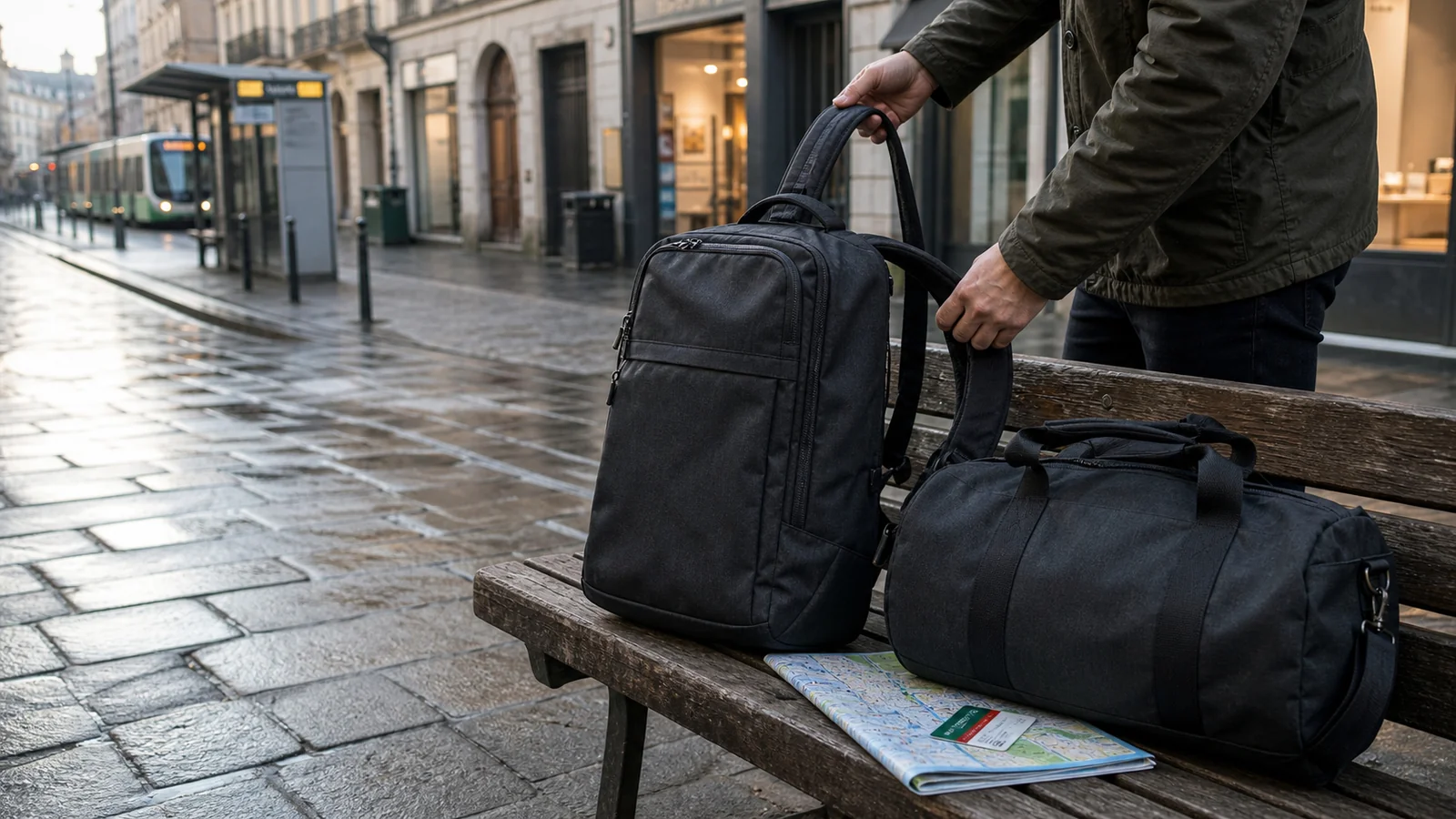
Guys Travel Bag: Choose One That Fits the Trip
Pick a guys travel bag by trip length, carry style, city walking, airline rules, and how much structure you need.
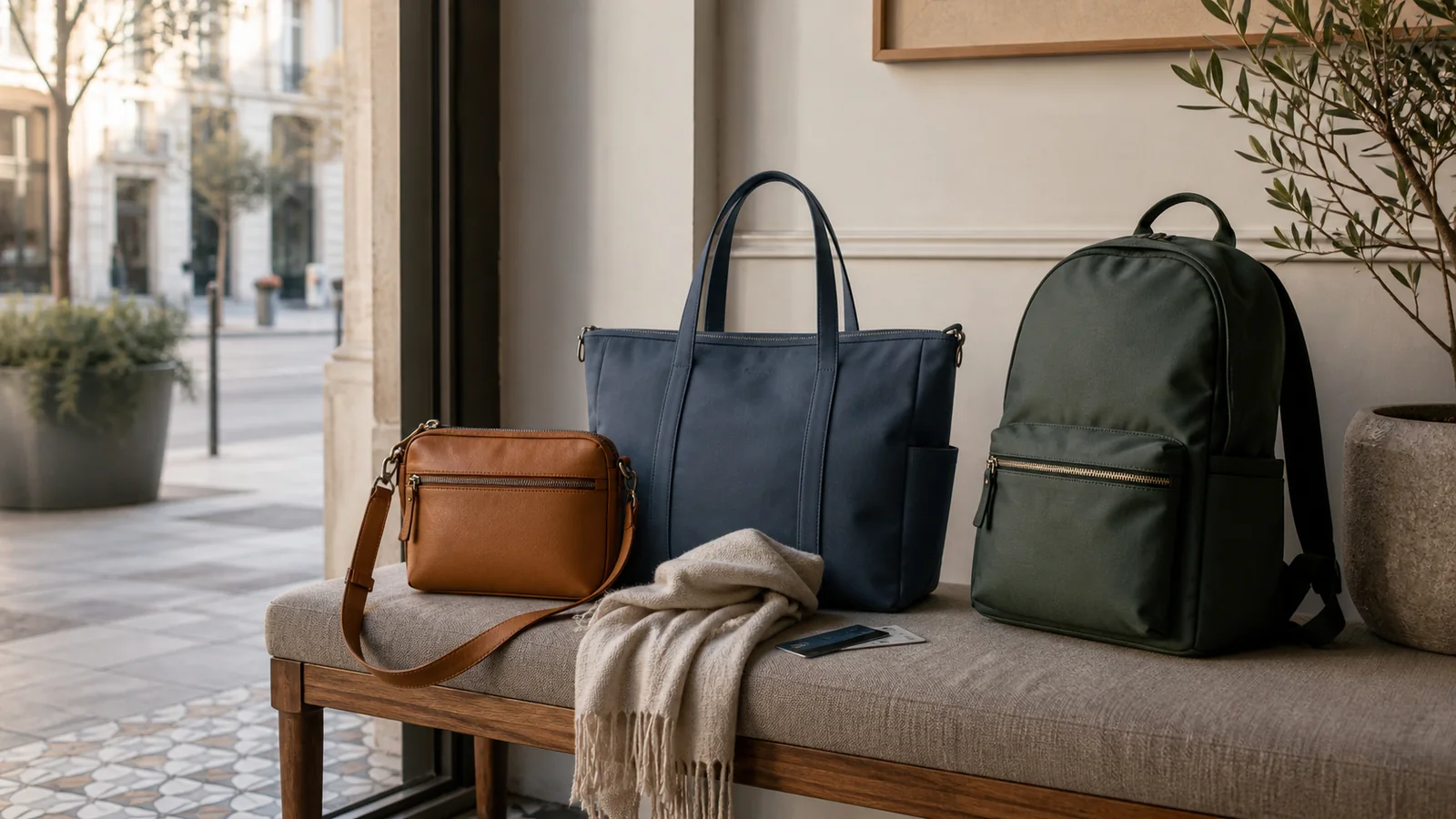
Women's Travel Bag: Best Styles for City Trips
Choose a women's travel bag by trip style, comfort, security, personal-item fit, and how you actually move all day.
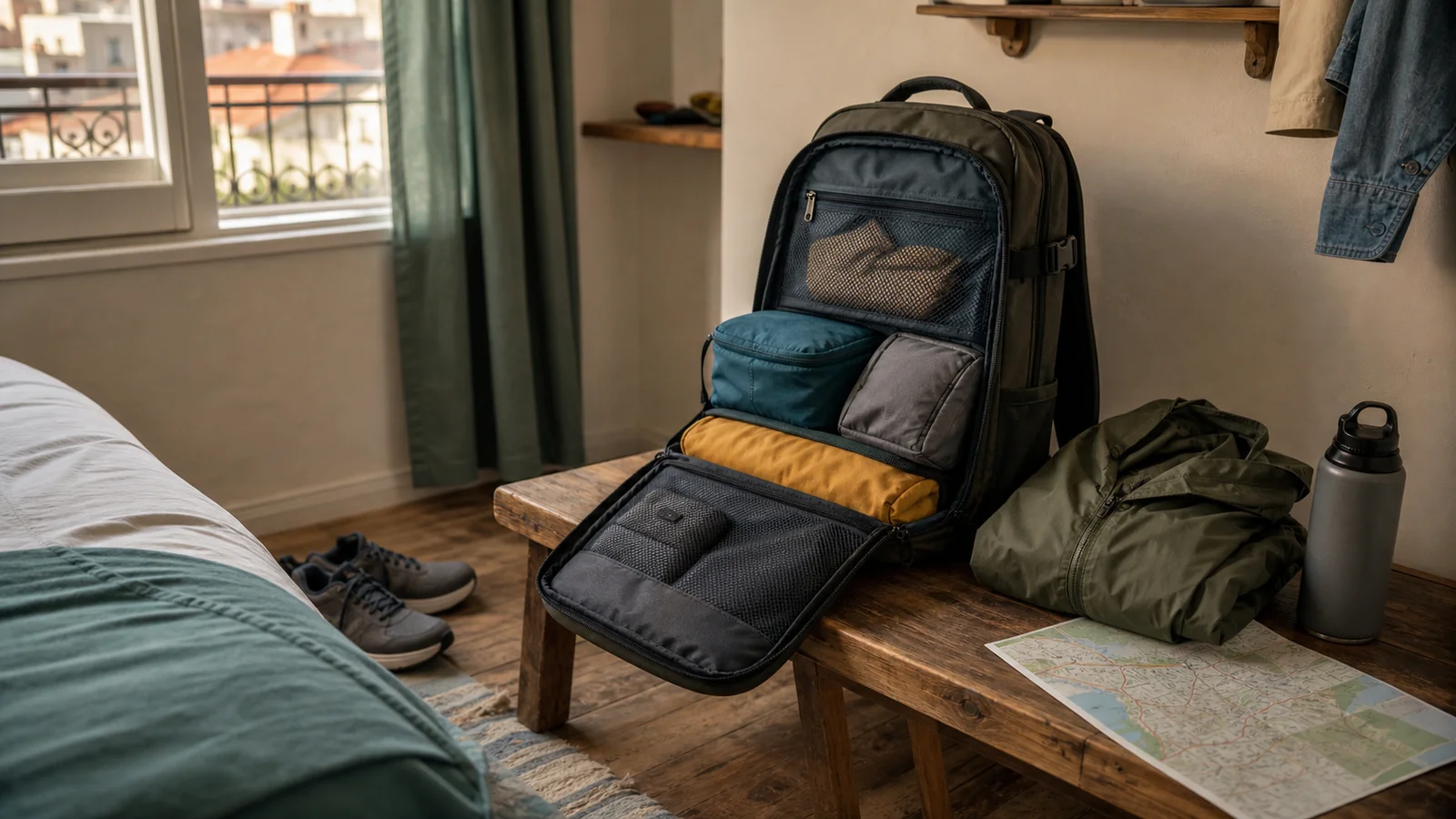
Best Budget Travel Backpacks for Carry-On Trips
Find an affordable travel backpack that fits your route, airline limits, laptop, and packing style without wasting space.