Guys Travel Bag: Choose One That Fits the Trip
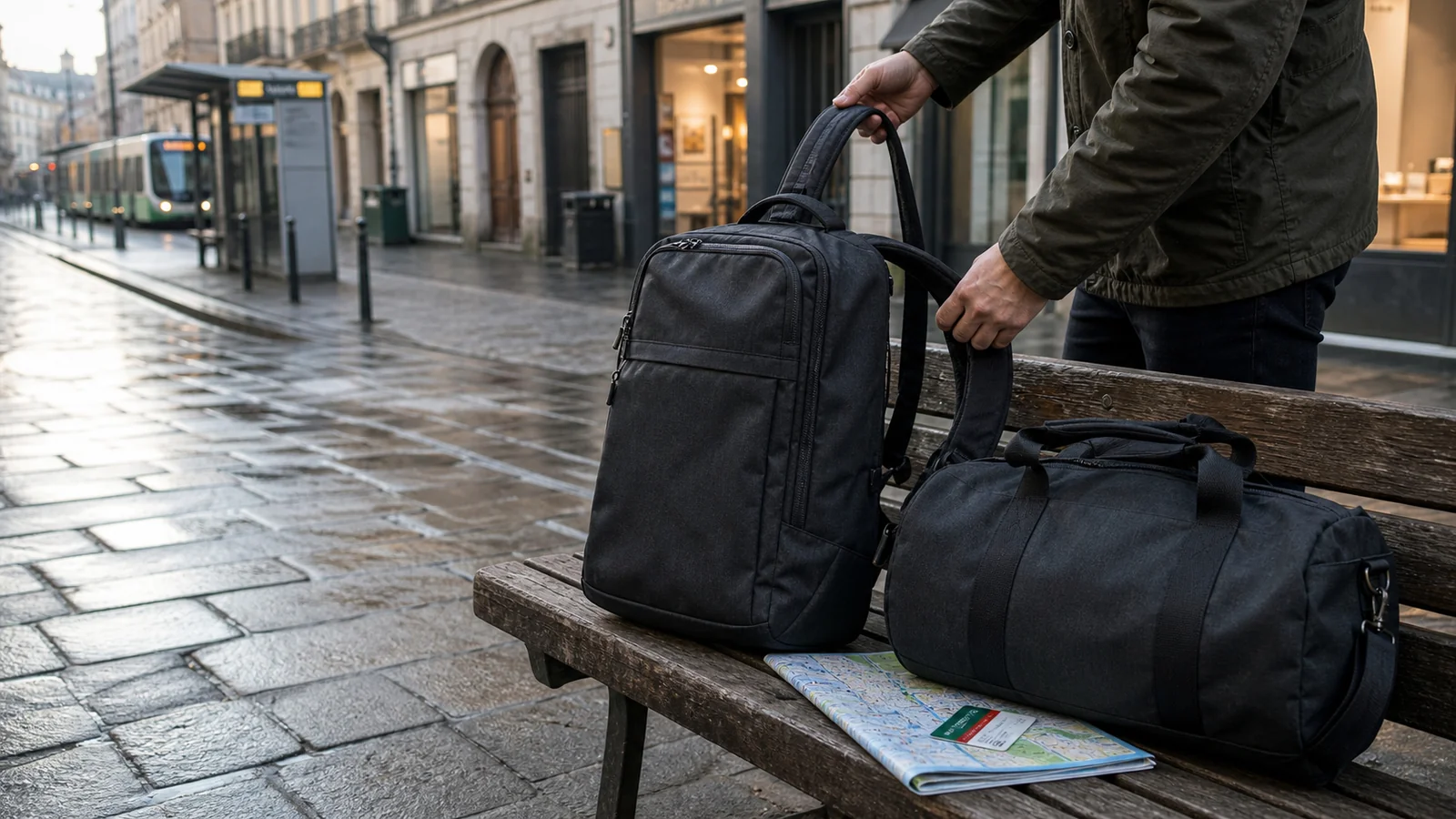
A Guys Travel Bag Should Match the Way You Move
A useful guys travel bag is not one magic backpack, duffel, or weekender that works for every trip. The right choice depends on how long you travel, how much you walk, whether you need a laptop, and how often you deal with trains, buses, stairs, and basic economy flights.
For slow city travel, we care less about looking rugged and more about getting through the day without fighting the bag. A good bag should sit comfortably, open easily in a small room, protect the items you actually carry, and stay simple enough that packing does not become its own project.
Most shopping lists focus on style names. That can help, but the better starting question is practical: where will the bag go after you arrive? If the answer is “on my back through three subway transfers,” choose differently than you would for a weekend drive to a hotel.
Quick Picks by Trip Style
Use this as a first filter before comparing brands or features.
| Trip style | Bag type to consider | What matters most |
|---|---|---|
| Weekend city break | 25- to 35-liter backpack or small weekender | Easy carry, light weight, simple clothing access |
| One-bag flight | 35- to 40-liter travel backpack | Carry-on dimensions, harness comfort, clamshell opening |
| Work trip | Structured backpack or briefcase-backpack hybrid | Laptop protection, clean pockets, balanced weight |
| Train-based Europe trip | Soft backpack or compact duffel backpack | Stairs, overhead racks, narrow aisles |
| Road trip or hotel weekend | Weekender duffel | Wide opening, shoe space, strong handles |
| Daily wandering after check-in | Sling, crossbody, or packable day bag | Low bulk, secure pocket, water bottle or layer space |
If you are unsure, start with the most common use case. A bag that fits your normal three- or four-night city trip is more valuable than a large bag bought for a rare long journey.
Best Overall: A 30- to 35-Liter Travel Backpack
For many independent travelers, a 30- to 35-liter travel backpack is the most useful guys travel bag. It can handle a long weekend, a light week with laundry, or a work-and-wander trip without forcing you into checked luggage.
Look for:
- A clamshell or wide panel opening
- Comfortable shoulder straps
- A sternum strap for longer walks
- A laptop sleeve close to your back, if needed
- At least one quick-access pocket
- Simple compression inside the main compartment
- A shape that does not become a hard box on your back
This size is also forgiving in city rooms. You can open it on a bed, repack quickly, and carry it up stairs without swinging a duffel into every doorway. It may not look as polished as a leather weekender, but it usually works better on arrival days.
If price is the main constraint, our budget travel backpack guide covers the features worth keeping when you skip premium materials.
Best for One-Bag Flights: A 35- to 40-Liter Carry-On Pack
If you want one bag for flights, choose a travel backpack built around carry-on dimensions. This is the category for longer trips, remote work, and routes where you do not want a roller bag on cobblestones or station stairs.
The advantage is capacity. The risk is weight. A large backpack can tempt you to pack like you have a suitcase, then carry that weight on your shoulders.
Before buying, check:
- Your usual airlines’ carry-on size rules
- Empty bag weight
- Whether the hip belt actually fits you
- How the bag feels with a real load
- Whether the laptop sleeve steals clothing space
- Whether the frame is too stiff for buses or small rooms
A 40-liter pack can be excellent for a two-week city route if you pack with restraint. It can also be miserable if you fill every pocket. The test is not how much it holds. The test is whether you still want to walk fifteen minutes after leaving the station.
Best for Style and Easy Packing: A Weekender Duffel
A weekender duffel is a strong choice when you are driving, taking a short train ride, or staying in one place. The wide opening makes clothes easy to see, and the shape works well for folded shirts, spare shoes, and a light jacket.
Choose a weekender if you:
- Take two- or three-night trips
- Do not need to walk far with the bag
- Prefer folding clothes over packing cubes
- Want one large open compartment
- Often travel by car, rideshare, or direct train
Be honest about carry comfort. A loaded duffel can feel fine from the apartment to the car and annoying across a large station. If you choose this style, look for a padded shoulder strap, sturdy grab handles, and a size you will not overfill.
For air travel, measure the bag when packed. Soft duffels can bulge past the listed dimensions, which matters when overhead space is tight.
Best Hybrid: A Duffel Backpack
A duffel backpack gives you a large main compartment plus backpack straps. This can work well for travelers who like the packing style of a duffel but need hands-free carry during transfers.
The best versions feel like travel bags first and gym bags second. They have stowable straps, a few sensible pockets, and fabric that can handle being set on train floors or hostel bunks.
Watch for tradeoffs:
- Some backpack straps are thin and uncomfortable.
- The bag may carry too low on your back.
- Rounded duffel shapes can feel unstable while walking.
- Laptop storage may be weaker than in a real backpack.
- Exterior shoe compartments can steal main space.
This style is useful when your route includes short walks, trains, ferries, or stairs, but not long daily carries. If you plan to walk across a city with all your things, a true travel backpack is usually better.
Best for Work Trips: A Structured Laptop Backpack
For work travel, the right guys travel bag often looks less like adventure gear and more like a tidy laptop backpack. The goal is to protect electronics, keep documents flat, and still leave room for one or two changes of clothes.
Prioritize:
- A suspended laptop sleeve
- Charger and cable organization
- A water bottle pocket away from electronics
- A clean exterior without dangling straps
- Enough depth for clothing without crushing papers
- A luggage pass-through if you sometimes use a roller
Do not choose a bag only because it looks office-ready. Pack it with a laptop, charger, headphones, toiletries, and clothes, then wear it. Dense electronics can make a slim backpack feel heavier than it looks.
If you often add a personal item to a larger carry-on, keep the work bag small enough to sit under a seat and light enough for an unplanned walk after check-in.
Best Personal-Item Bag: A Soft Backpack Under 30 Liters
A smaller backpack is the best choice for travelers who fly basic economy, take overnight trips, or prefer keeping everything under the seat. This style works well when your packing list is disciplined.
The sweet spot is usually 22 to 30 liters. That gives you room for a few clothes, toiletries, a light layer, and daily essentials without turning the bag into a full carry-on.
Good signs include:
- Soft sides that compress when half full
- One main compartment rather than many tiny pockets
- Comfortable straps for airport walks
- A protected tablet or laptop sleeve if needed
- A top pocket for passport, earbuds, and wallet
- No heavy frame or bulky tech gimmicks
This kind of bag is also useful after arrival. You can empty out clothing and use it as a day bag, which is harder with a stiff carry-on pack.
Best Small Add-On: Sling or Crossbody Bag
For city wandering, a small sling or crossbody can be more useful than another large travel bag. It keeps your phone, wallet, sunglasses, transit card, and compact camera close without making you wear your main pack all day.
Choose one with enough structure to sit comfortably across your body, but not so much bulk that it looks like a second backpack. A secure rear pocket is helpful for crowded transit. A small internal divider keeps keys from scratching sunglasses or a phone.
This is not a replacement for your main bag unless you travel extremely light. It is the bag you use once your clothes are at the guesthouse and the city becomes the point again.
Features Worth Paying For
The best features are the ones you notice every travel day.
Worth prioritizing:
- Comfortable straps and handles
- Durable zippers
- Sensible laptop protection
- Weather-resistant fabric
- Easy access to passport and wallet
- Stable shape when packed
- Low empty weight
Usually less important:
- Built-in USB ports
- Too many hidden pockets
- Heavy leather if you walk a lot
- Tactical webbing you will not use
- Oversized shoe garages
- Overly rigid shells for soft-bag travel
The bag should make packing easier, not more theatrical. If a feature does not solve a real travel problem, it is probably decoration.
Common Mistakes to Avoid
The most common mistake is buying the biggest bag that still counts as carry-on. Capacity feels useful at home, but weight shows up on sidewalks, station stairs, and long check-in lines.
Avoid:
- Testing the bag empty only
- Ignoring airline size rules
- Carrying dense items far from your back
- Choosing leather or canvas without considering weight
- Assuming “men’s” means better fit
- Buying a duffel for trips with lots of walking
- Forgetting a smaller day bag
Also avoid designing your bag choice around a fantasy version of your trip. If you normally take practical city breaks, buy for that. You do not need expedition styling to walk from a train station to a neighborhood hotel.
How to Test a Bag Before a Trip
Pack the bag exactly as you would for a real trip. Include shoes, toiletries, laptop, chargers, jacket, and a water bottle. Then walk for twenty minutes, climb stairs, sit in a chair, and unpack it in a small space.
Ask:
- Does the bag pull on one shoulder or sit evenly?
- Can you reach your passport, wallet, and phone quickly?
- Does the laptop press into your back?
- Can the bag stand or rest without spilling open?
- Do the zippers feel strained?
- Would you still want to wander after carrying it?
This test is simple, but it catches most bad choices before a travel day makes them expensive.
FAQ
What size travel bag is best for men?
For most city trips, a 25- to 35-liter backpack or weekender is enough. Choose 35 to 40 liters for one-bag flights or longer trips with laundry.
Is a backpack or duffel better for travel?
A backpack is better for walking, stairs, transit, and one-bag flights. A duffel is better for short hotel weekends, car trips, and travelers who want a wide open packing space.
Can a guys travel bag fit under an airplane seat?
Some small backpacks and soft personal-item bags can fit under a seat, but rules vary by airline and aircraft. Check your airline’s current dimensions and measure the bag when packed.
What should I look for in a men’s travel backpack?
Look for comfortable straps, a useful opening, durable zippers, laptop protection if needed, low empty weight, and a size that matches your trip length and airline rules.
Do I need a separate day bag?
For most city trips, yes. A small sling, crossbody, or packable bag keeps daily essentials close after you leave your main bag at your lodging.
The Bottom Line
A guys travel bag should fit the trip before it fits an image. For most slow city travel, that means a comfortable 30- to 35-liter backpack, a compact weekender for short stays, or a small personal-item bag when you want to travel very light.
Choose the bag that makes arrival easier. If you can carry it through transit, open it in a small room, and still feel like walking after check-in, it is doing the job.
You might also like
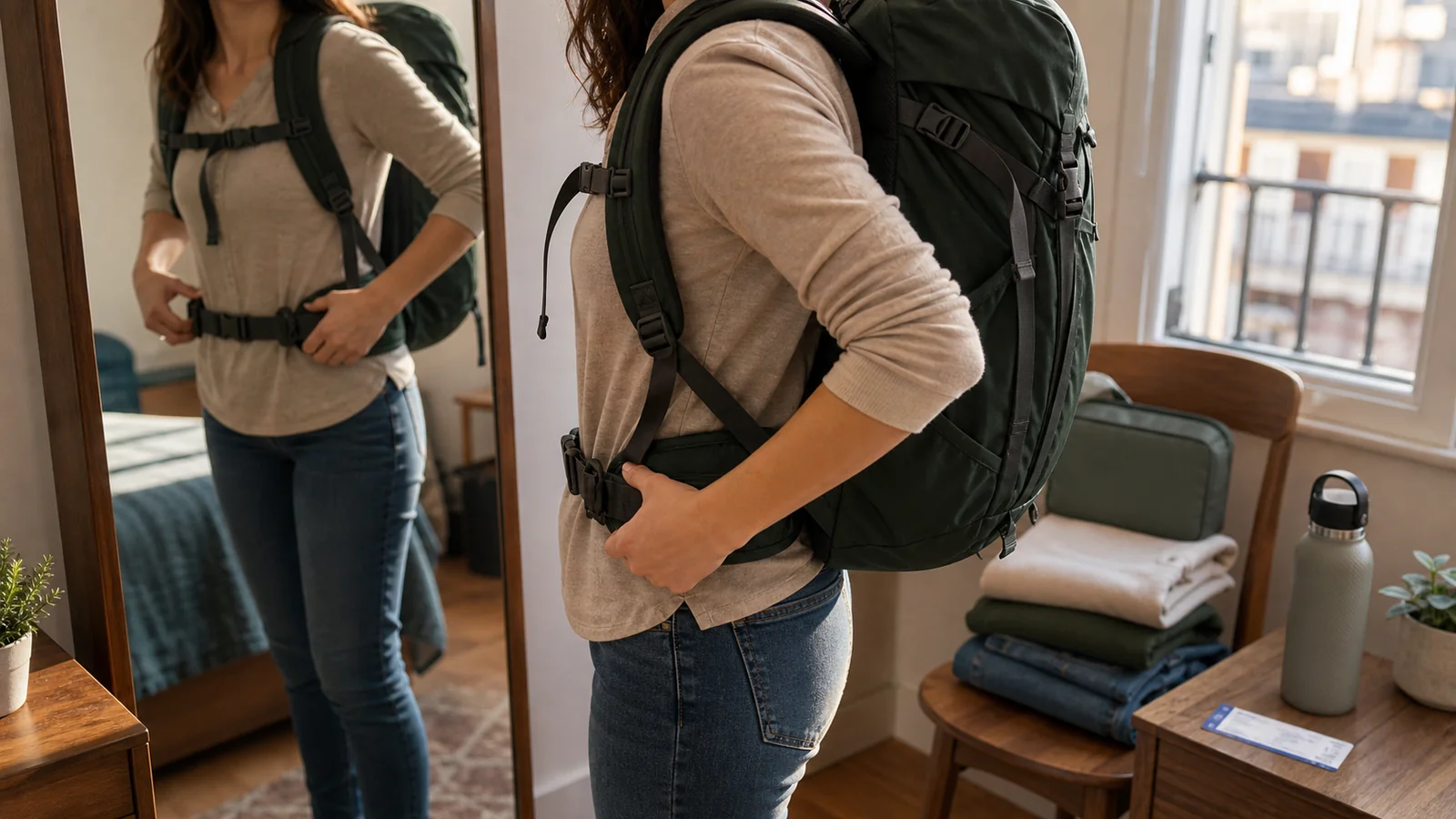
Travel Backpack for Women: Fit Comes First
Choose a travel backpack for women by torso fit, straps, capacity, laptop space, and how it feels on real city days.
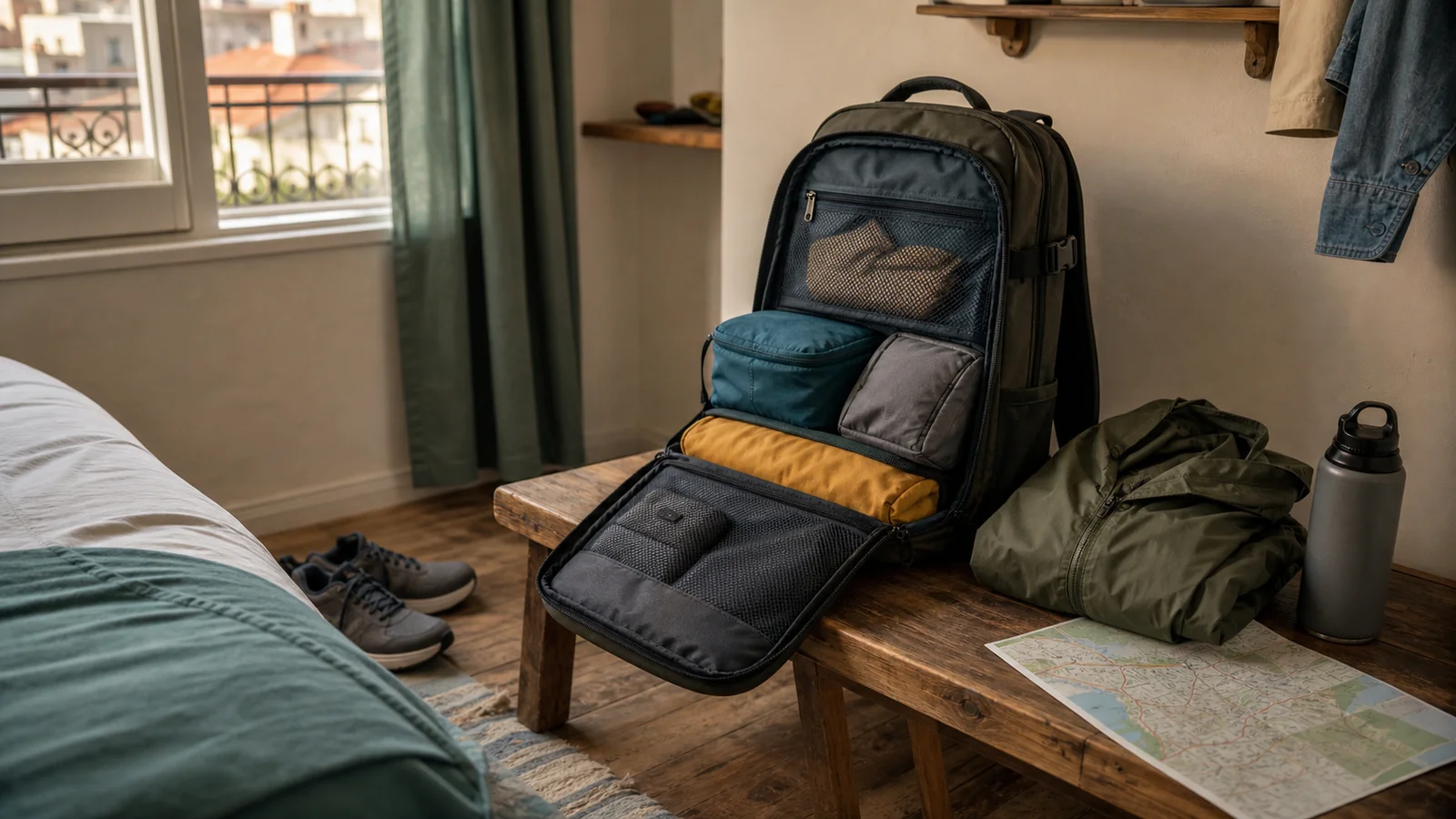
Best Budget Travel Backpacks for Carry-On Trips
Find an affordable travel backpack that fits your route, airline limits, laptop, and packing style without wasting space.
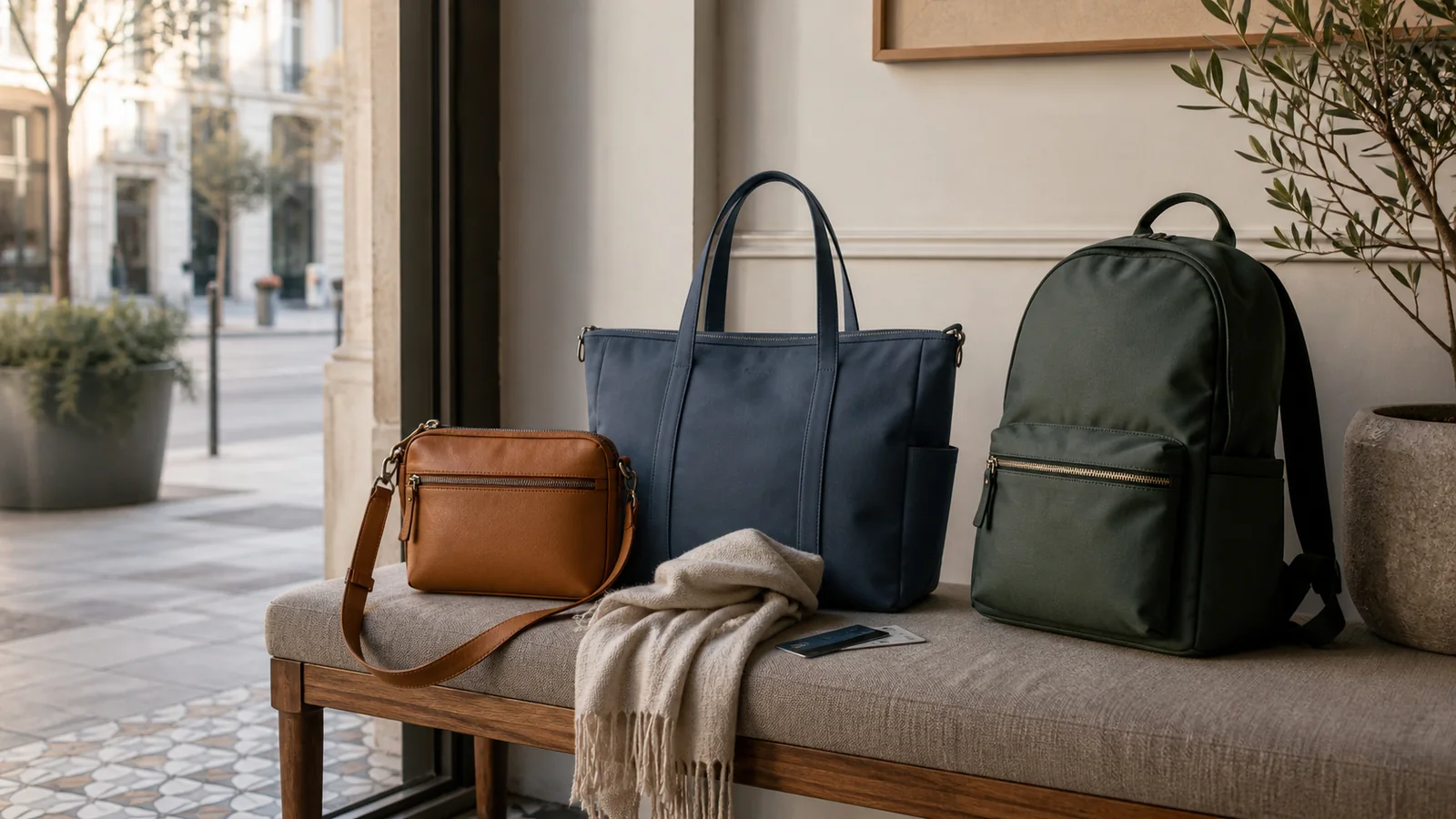
Women's Travel Bag: Best Styles for City Trips
Choose a women's travel bag by trip style, comfort, security, personal-item fit, and how you actually move all day.