Travel Car Seat: What to Check Before You Fly
A Travel Car Seat Is a Safety Choice First
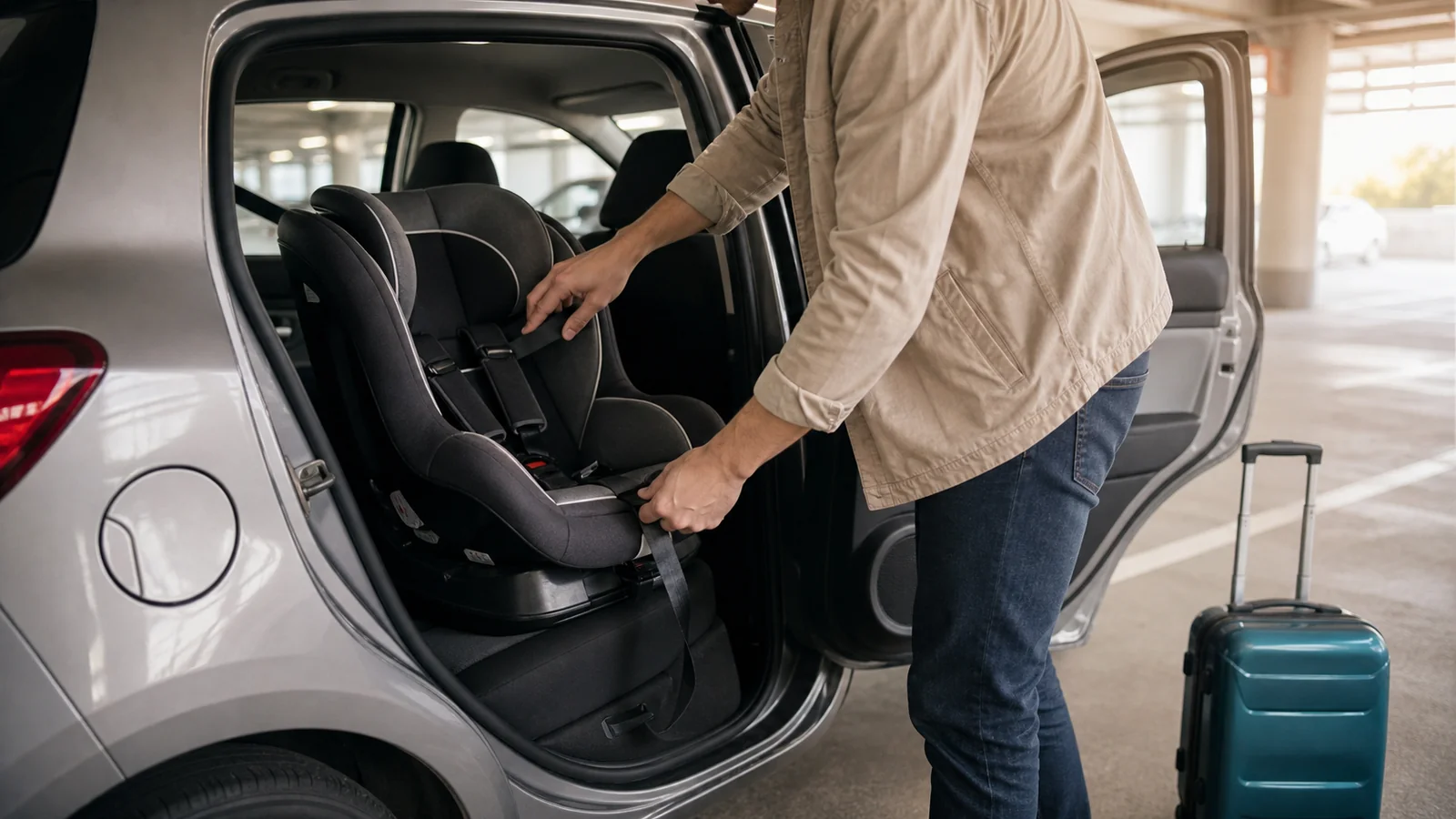
A travel car seat has to do two jobs. It needs to protect your child in a vehicle, and it needs to be practical enough that you will actually bring it, carry it, install it, and use it correctly. That balance is harder than it sounds when you add airport security, narrow airplane rows, taxis, rental cars, hotel stairs, and a tired child.
For slow family travel, the best seat is not always the smallest one. It is the seat that fits your child, fits the transportation you will use, and does not turn every transfer into a stressful project.
We are not replacing manufacturer instructions or a certified car seat check. Use this guide to frame the decision, then confirm the exact rules and installation details for your seat, airline, car, and destination.
Start With Your Child, Not the Trip
Before comparing travel-friendly features, confirm the right seat type for your child. The National Highway Traffic Safety Administration recommends using a seat that fits the child’s age, height, and weight, and keeping children in each stage as long as they remain within the manufacturer’s limits.
That means a tiny travel seat is not useful if your child has outgrown it. A booster is not a shortcut for a child who still needs a harness. A comfortable airport day does not matter if the seat is wrong for the car ride after landing.
Check:
- Your child’s current height and weight
- Rear-facing or forward-facing requirements
- Harness height and fit
- Seat expiration date
- Recall status
- Manufacturer limits for airplane and vehicle use
- Whether the seat has been in a moderate or severe crash
If you are unsure, use NHTSA’s car seat resources or find a certified child passenger safety technician before the trip.
Airplane Approval Matters
If you plan to use a car seat on a plane, look for a clear label saying the restraint is certified for use in motor vehicles and aircraft. The Federal Aviation Administration points travelers toward approved child restraint systems for children who are too small for the aircraft seat belt alone.
Do not assume every child restraint works during takeoff, landing, and turbulence. Backless boosters, many vest-style products, and some travel devices may not be approved for aircraft use. A car seat can be excellent in a car and still be awkward or unsuitable on an airplane.
Before booking, check:
| Question | Why it matters |
|---|---|
| Does the seat have aircraft approval? | Airline crews may ask to see the label |
| How wide is the seat? | Narrow aircraft seats can be a problem |
| Will you buy a ticket for the child? | A lap child cannot use a car seat without a seat |
| Can it install with an airplane lap belt? | Lower anchors are not used on planes |
| Does your airline have placement rules? | Car seats are often placed by windows, not exit rows |
The American Academy of Pediatrics also encourages using an FAA-approved restraint for safer air travel when it fits the child’s age and size.
Bring Your Own Seat or Rent One?
Renting a car seat can be convenient, especially if you are flying with several bags. The tradeoff is uncertainty. You may not know the exact model, age, cleanliness, installation history, or whether it has been in a crash.
Bringing your own seat gives you more control. You know how it fits your child, you can practice installing it, and you do not have to hope the rental counter has the right type available. The downside is carrying it through the airport and protecting it from damage if you check it.
Use this decision guide:
| Bring your own if | Renting may work if |
|---|---|
| Your child is young or hard to fit | The car ride is short and low-risk details are clear |
| You will use taxis, rideshares, or rental cars often | The rental company confirms the exact seat type |
| You know your seat installs well | You cannot physically carry another item |
| You want to use it on the airplane | You do not plan to use a car seat during the flight |
If the trip includes a stroller too, think about the full airport load. Our Nuna travel stroller guide may help you decide whether the stroller side of the setup is realistic.
Weight and Carrying Shape Can Make or Break the Day
A travel car seat that looks manageable at home can feel very different after a long security line. Weight matters, but so does shape. Some seats are light but bulky. Some are narrow but awkward to strap to luggage. Some are comfortable in the car but painful to carry for ten minutes.
Before travel day, do a real test:
- Carry the seat from your home to your car or down the block.
- Try the travel bag, strap, or cart you plan to use.
- Wear the backpack or day bag you will have at the airport.
- Practice holding your child’s hand while moving the seat.
- Confirm whether the seat can fit through airport scanners or needs hand inspection.
The Transportation Security Administration allows child car seats in carry-on and checked bags, but screening logistics can vary by size and checkpoint. Build in extra time.
Airport Security and Boarding
At security, remove loose items from the seat. Snacks, toys, blankets, cup holders, and clips can slow the process or get lost. If the seat fits through the X-ray machine, it may go through with other bags. If not, officers may inspect it another way.
For a calmer airport process:
- Keep the aircraft approval label visible.
- Carry the manual or a digital copy.
- Board early if the airline offers family boarding.
- Install the seat without blocking the aisle longer than necessary.
- Ask for help only when you need it, but keep control of installation.
- Use the manufacturer’s instructions, not a random video from memory.
Airplane seats are not all the same. If your car seat is wide or your aircraft is small, call the airline before departure and ask about seat width and child restraint rules.
Installation in Rental Cars, Taxis, and Rideshares
The car ride after landing is often the reason the travel car seat matters most. Airport transfers can involve unfamiliar vehicles, tired adults, traffic, and pressure to move quickly. That is not the moment to read the manual for the first time.
Practice both common installation methods before you leave: seat belt and lower anchors, if your seat allows both. In taxis or rideshares, you may only have a seat belt. In some countries, anchor systems and belt layouts may differ from what you use at home.
Check the install every time:
- The seat moves less than one inch side to side or front to back at the belt path.
- The recline angle is correct for your child.
- The harness lies flat and snug.
- The chest clip is positioned according to the seat instructions when used.
- No bulky coat sits under the harness.
- The vehicle seat belt is locked if the installation requires it.
If a driver rushes you, take the time anyway. A slow installation is better than a fast wrong one.
What About Booster Seats?
Booster seats can be useful for older children who have outgrown a harness seat but are not ready for an adult seat belt alone. They are often easier to carry than harnessed seats. The catch is that boosters are for vehicle use, not for airplane takeoff and landing, because aircraft lap belts work differently from vehicle lap-and-shoulder belts.
For city trips, a compact booster can help with taxis or rental cars once your child is truly ready for that stage. Do not move up early just because the booster packs smaller. Your child’s fit comes first.
Packing and Protecting the Seat
If you check a car seat, use a protective bag and remove anything that can detach. Some families prefer to bring the seat onboard when they have purchased a child seat on the plane. Others gate-check it or check it at the counter. Each choice has tradeoffs.
Checked seats can be scuffed or handled roughly. Onboard seats require carrying and installation. Gate-checking may reduce some carrying time but still leaves the seat outside your control.
Pack:
- The car seat manual or saved PDF
- A lightweight cover or travel bag
- A luggage strap or cart if you need one
- A small cleaning cloth
- A backup plan if the seat is delayed or damaged
Take a photo of the seat before checking it if you are worried about damage.
Common Mistakes to Avoid
The most common mistakes are not exotic. They are rushed decisions made during a messy travel day.
Avoid:
- Buying a seat only because it is marketed as “travel.”
- Forgetting to check aircraft approval.
- Assuming a rental company will have the right seat.
- Moving a child to a booster too early.
- Installing the seat for the first time at the airport.
- Packing bulky coats under the harness.
- Letting the stroller, luggage, and car seat setup become too much for one adult.
Your system should match your actual trip. A direct flight and one rental car need a different setup than three trains, two taxis, and a walk-up apartment.
FAQ
Can I bring a car seat on a plane?
Yes, if you have a seat for the child and the car seat is approved for aircraft use. Check the label, the airline’s rules, and the seat width before travel.
Is a travel car seat safer than a regular car seat?
Not automatically. The safest option is the correct seat for your child’s size, used and installed correctly. A travel-focused seat is useful only if it still fits the child and the vehicle.
Should I check a car seat or use it onboard?
Using it onboard can be safer for a child who needs a restraint and can protect the seat from baggage handling. Checking it may be easier when you do not have a separate airplane seat for the child, but use a protective bag and inspect it afterward.
Can I use a booster seat on an airplane?
Boosters are generally for cars with lap-and-shoulder belts, not for airplane takeoff and landing. Older children may use the aircraft seat belt if it fits them properly, but check current airline and FAA guidance.
What is the best travel car seat for taxis?
The best taxi-friendly seat is one you can install correctly with a seat belt, carry realistically, and use within your child’s height and weight limits. Practice before the trip, because taxi installs often happen under time pressure.
The Bottom Line
A travel car seat should make the trip safer without making every transfer feel impossible. Start with your child’s fit, confirm aircraft and vehicle rules, practice installation, and keep the full airport load honest.
For slow family travel, the winning setup is not the fanciest one. It is the one you can use correctly when everyone is tired and the next city is waiting outside the terminal.
You might also like

Travel Tea: How to Pack and Brew Calmly
Pack travel tea without fuss by choosing the right leaves, tools, water routine, and airport-friendly setup.
What Is a Travel Adapter? A Simple Guide
Learn what a travel adapter does, when you need a converter, and how to pack the right plug setup for a lighter trip.
Travel Trailer Furnace Repair: Safe First Checks
Troubleshoot a travel trailer furnace safely with basic checks, warning signs, and clear rules for calling an RV technician.