Travel Trailer Furnace Repair: Safe First Checks
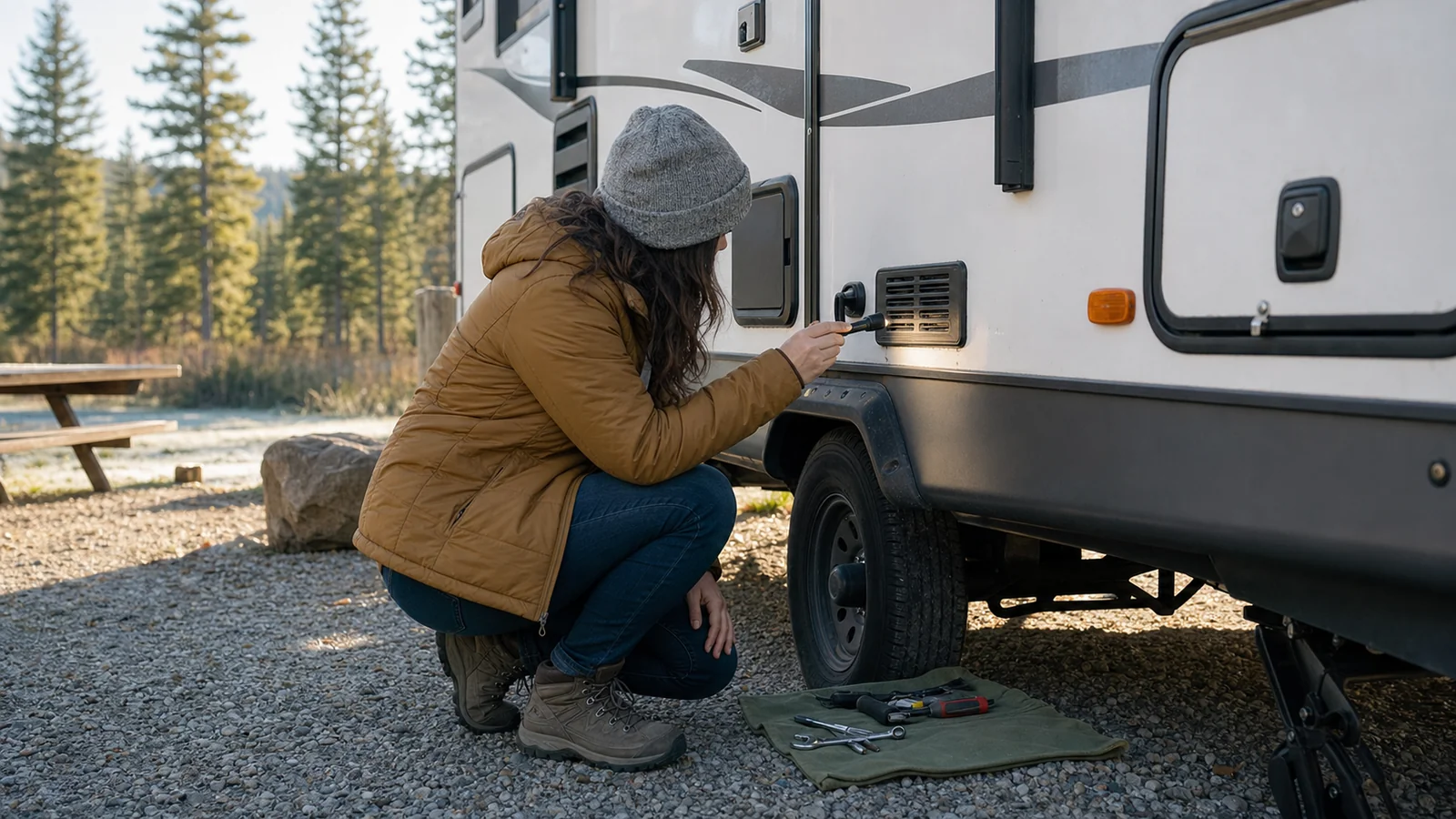
Start With Safety, Not the Furnace Panel
Travel trailer furnace repair is not the same as fixing a squeaky cabinet latch. An RV furnace usually combines propane, 12-volt electrical power, moving air, ignition, exhaust, and safety switches in a small space. Some checks are simple and appropriate for an owner. Others belong to a qualified RV technician.
The calm approach is to separate basic troubleshooting from true repair. You can check power, propane supply, thermostat settings, airflow, exterior vents, and obvious warning signs. You should not bypass safety switches, modify propane lines, open sealed combustion parts, or keep trying a furnace that smells wrong.
For slow travel, heat is part of the trip’s comfort and safety. A cold trailer can turn a flexible road route into a stressful night fast. But a furnace problem is one of those moments where patience matters more than cleverness.
When to Stop Immediately
Stop using the furnace and get qualified help if you notice any serious warning sign.
Call a professional if:
- You smell propane or rotten-egg odor.
- A carbon monoxide alarm sounds.
- A propane alarm sounds.
- You see soot near the exhaust.
- The flame, if visible in a service context, looks abnormal.
- The furnace overheats or cycles rapidly.
- Wiring looks burned, melted, or modified.
- You hear repeated ignition attempts with no heat.
- The exterior exhaust is blocked by damage or debris you cannot clear safely.
- You are unsure whether the system is safe.
If you smell propane, turn off the propane supply if it is safe to do so, avoid flames and electrical switches, ventilate, leave the area, and contact appropriate help. Do not keep testing because “it might just need one more try.”
Carbon monoxide is especially serious because it can be invisible and odorless. Working detectors are not optional in a trailer.
Know What Type of Problem You Have
Most furnace complaints fall into a few patterns. Naming the pattern helps you avoid random guessing.
| Symptom | Possible simple causes | When it becomes technician work |
|---|---|---|
| Nothing happens | Thermostat off, low battery, blown fuse | Wiring, control board, thermostat circuit |
| Fan runs but no heat | Propane off, air in line, sail switch issue, ignition issue | Gas valve, igniter, control board, burner service |
| Furnace lights then shuts off | Low airflow, blocked vent, sensor issue, propane pressure | Limit switch, flame sensor, combustion problem |
| Short cycling | Dirty airflow path, thermostat location, weak battery | Overheating, limit switch, duct problems |
| Weak heat | Low propane, poor airflow, ducts blocked | Furnace sizing, duct repair, burner service |
| Strange smell or soot | Dust burn-off once, blocked vent | Propane leak, poor combustion, exhaust issue |
This table is not a repair manual. It is a way to decide what is safe to check before you book help.
Step 1: Check the Thermostat Like a Tired Traveler
Start with the least dramatic cause. Many furnace scares begin with a thermostat setting, mode, or battery issue.
Check:
- Thermostat set to heat.
- Temperature set above the room temperature.
- Fan setting in the correct mode for your system.
- Thermostat screen working.
- Thermostat batteries, if it uses them.
- Any loose faceplate or obvious connection issue.
- Whether the furnace responds after a short delay.
Some RV furnaces do not start instantly. The blower may run before ignition. Give the system a reasonable moment, but do not let it attempt ignition over and over if you smell gas or hear repeated failed cycles.
If the thermostat seems dead, check the trailer’s 12-volt power before assuming the furnace itself has failed.
Step 2: Confirm 12-Volt Power
Many travel trailer furnaces depend on 12-volt power for the blower, control board, ignition, and safety sequence. Even when you are plugged into shore power, the furnace may still rely on the battery and converter.
Basic checks:
- Is the battery connected?
- Is the battery charged?
- Is the battery disconnect switch on?
- Are other 12-volt lights or fans working?
- Is the furnace fuse intact?
- Is the converter working when plugged into shore power?
- Are battery terminals visibly loose or corroded?
Low voltage can make a furnace act strange. The fan may run too slowly to close the sail switch, or the control board may fail to complete the start sequence. If your battery is weak, charge it fully and test again only if there are no gas, odor, or alarm concerns.
Do not replace fuses blindly over and over. A fuse that keeps blowing is a sign of a fault that needs diagnosis.
Step 3: Check the Propane Supply
If the fan runs but the furnace does not heat, propane supply is one possible cause.
Check:
- Propane cylinder valve is open.
- Cylinder is not empty.
- Automatic changeover regulator is pointed correctly, if equipped.
- Other propane appliances work.
- Propane detector is not alarming.
- The trailer has not been sitting long enough for air in the line to be likely.
After a cylinder change, air in the line can delay ignition. Some owners light a stove burner first to confirm propane flow, but only do this if the stove is safe to use, the area is ventilated, and there is no gas smell or alarm.
Propane pressure, regulators, gas valves, and lines are not casual tinkering areas. If basic supply checks do not solve the problem, stop there.
Step 4: Look at Airflow and Vents
RV furnaces need airflow. Blocked intake, blocked exhaust, covered ducts, or restricted return air can cause shutdowns and overheating.
Check:
- Exterior furnace intake and exhaust are clear.
- No mud, snow, leaves, nests, or travel debris block the vent.
- Interior heat registers are open.
- Bedding, bags, shoes, or storage bins are not blocking vents.
- Return air area is not covered.
- Furniture or gear has not shifted during towing.
Do not poke deep into furnace openings or disassemble combustion parts. Clear obvious exterior debris gently. If you see soot, damage, melted plastic, or signs of animals inside the system, call a technician.
Airflow problems are common because trailers are small and storage is tempting. A bag shoved against a return area can create a real heating problem.
Step 5: Understand the Sail Switch Without Bypassing It
A sail switch is a safety device that confirms the blower is moving enough air before the furnace allows ignition. If airflow is weak, the switch may not close, and the furnace may run the fan without producing heat.
Possible causes include:
- Low battery voltage
- Weak blower motor
- Dust or debris
- Blocked return air
- Blocked ducts
- A faulty sail switch
The important part: do not bypass the sail switch. It is there because ignition without proper airflow can be dangerous. If your troubleshooting points toward the sail switch after basic power and airflow checks, that is a technician-level diagnosis unless you are trained and following the manufacturer’s service procedures.
Step 6: Reset Only if the Manual Says To
Some furnaces have reset procedures. Others lock out after failed ignition attempts and need a specific power or thermostat sequence. The right process depends on the furnace brand and model.
Look for:
- Furnace make and model
- Owner’s manual
- Fault light or blink code
- Reset instructions
- Lockout notes
- Service warnings
Do not improvise resets by rapidly switching power, pulling random fuses, or cycling propane repeatedly. If the furnace tried several times and failed, there is a reason. Use the manual or stop.
Keep a photo of the furnace model label in your travel notes. It is much easier to call a mobile RV technician when you can give the exact model.
What You Can Reasonably Fix Yourself
Some owner-level fixes are practical and low-risk.
You may be able to:
- Turn the thermostat to the correct mode.
- Replace thermostat batteries.
- Charge the house battery.
- Replace one clearly blown fuse once.
- Open a propane cylinder valve.
- Switch to the full propane cylinder.
- Clear obvious debris from the exterior vent.
- Move bags away from interior vents.
- Clean around return air areas.
- Reset the furnace only according to the manual.
These are not really furnace repairs. They are support checks around the furnace. That distinction matters.
What Should Be Professional Repair
Call an RV technician for anything involving:
- Propane lines or fittings
- Regulator pressure
- Gas valve replacement
- Burner cleaning or adjustment
- Ignition components
- Control board diagnosis
- Repeated blown fuses
- Blower motor replacement
- Limit switch problems
- Sail switch replacement if access requires disassembly
- Combustion chamber concerns
- Exhaust damage
- Soot or abnormal combustion
- Any alarm event
The reason is not that owners are incapable. It is that propane appliances need correct diagnosis, leak testing, airflow, exhaust integrity, and safety verification after repair.
Preventive Furnace Checks Before a Cold Trip
The best furnace repair is the one you avoid before leaving.
Before a cold-weather route:
- Test the furnace at home or in storage.
- Let it complete more than one heating cycle.
- Confirm warm air from each register.
- Check the exterior vent for blockage.
- Confirm propane level.
- Charge and test the battery.
- Test carbon monoxide and propane alarms.
- Replace detector batteries if applicable.
- Check the fire extinguisher.
- Pack the furnace manual or save it offline.
Do this before the first freezing night, not after you arrive tired at a dark campsite.
Our guide to shopping for travel trailers makes a similar point at purchase time: safety systems matter as much as floor plans. Heating, tires, brakes, propane, and detectors are part of the real trip, not background details.
What to Do If the Furnace Fails on the Road
If the furnace fails during travel, focus on safe comfort first.
Options may include:
- Moving to a campground with shore power
- Using the trailer’s electric fireplace only if installed and rated for that use
- Using safe electric heat only within the trailer’s electrical limits
- Booking a hotel for the night
- Moving to a warmer location
- Calling a mobile RV technician
- Winterizing if freezing temperatures threaten plumbing
Do not use an outdoor heater, camp stove, grill, or oven to heat the trailer. Do not run unsafe combustion appliances indoors. Comfort is not worth carbon monoxide risk.
If temperatures may drop below freezing and you cannot heat the trailer, protect water lines and tanks according to your trailer’s winterization guidance. A furnace problem can become a plumbing problem quickly.
How to Talk to a Mobile RV Technician
A clear description saves time.
Have this ready:
- Trailer year, make, and model
- Furnace brand and model
- Exact symptom
- Whether the fan runs
- Whether ignition clicks
- Whether other propane appliances work
- Battery voltage or battery status, if known
- Any fuse issue
- Any alarm, odor, or soot
- What you already checked
- Campground or location access details
Avoid saying only “the furnace is broken.” Say, for example, “The thermostat calls for heat, the blower runs for about 30 seconds, I hear clicking, but there is no warm air and it shuts down. Propane stove works, battery is charged, and there is no odor or alarm.”
That kind of note helps the technician bring the right parts and decide whether the unit is safe to test.
Mistakes to Avoid
Avoid these common furnace troubleshooting mistakes:
- Ignoring propane or carbon monoxide alarms
- Bypassing a sail switch or limit switch
- Replacing parts without diagnosis
- Running the furnace with a blocked vent
- Using the oven to heat the trailer
- Repeatedly cycling ignition after failed starts
- Assuming shore power means the 12-volt side is fine
- Forgetting low battery voltage can stop ignition
- Blocking return air with stored gear
- Waiting until a freezing night to test the furnace
The right repair path is boring on purpose: stop, check basics, protect people, then bring in a technician when the problem moves beyond the safe owner checks.
FAQ
Why does my travel trailer furnace fan run but no heat comes out?
Common possibilities include low propane, air in the propane line, low battery voltage, blocked airflow, ignition trouble, or a safety switch that is not allowing ignition. Check simple supply and airflow items first, then call a technician.
Can I repair an RV furnace myself?
You can handle basic checks like thermostat settings, battery charge, fuses, propane supply, and blocked vents. Repairs involving propane, ignition, combustion, wiring faults, or safety switches should be handled by a qualified RV technician.
Why does my RV furnace start and then shut off?
It may be overheating, failing to sense flame, losing proper airflow, or hitting a safety limit. Blocked vents or weak battery power can contribute, but repeated shutdowns need careful diagnosis.
Is it safe to use a space heater instead?
Only use an electric heater if the heater, outlet, cord, and trailer electrical system can handle it safely, and follow the heater instructions. Never use outdoor combustion heaters, grills, stoves, or ovens to heat the trailer.
How often should I test my travel trailer furnace?
Test it before any cold-weather trip and at least once before the heating season. Let it complete full cycles, confirm warm airflow, and make sure propane and carbon monoxide detectors work.
The Bottom Line
Travel trailer furnace repair starts with restraint. Check the thermostat, 12-volt power, propane supply, airflow, vents, and manual-guided resets. Stop immediately for odors, alarms, soot, repeated failed ignition, or anything involving propane and combustion parts.
A warm trailer is wonderful on a slow road trip. A safe trailer is better. Let simple checks stay simple, and let real furnace repair belong to someone with the tools, training, and leak-testing process to finish the job correctly.
You might also like
Travel Trailers for Sale Near Me: A Smart Guide
Shop local travel trailers by tow limits, floor plan, storage, inspection needs, ownership costs, and real trip style.
Travel Advisory Map Indiana: Road Checklist
Use Indiana's travel advisory map before you drive, with a county-by-county checklist for safer flexible trips.

Student Air Travel Discounts: How to Compare Them
Compare student air travel discounts by checking eligibility, total fare, baggage, flexibility, routes, and booking rules.