Golf Travel Bags: How to Choose One for Flights
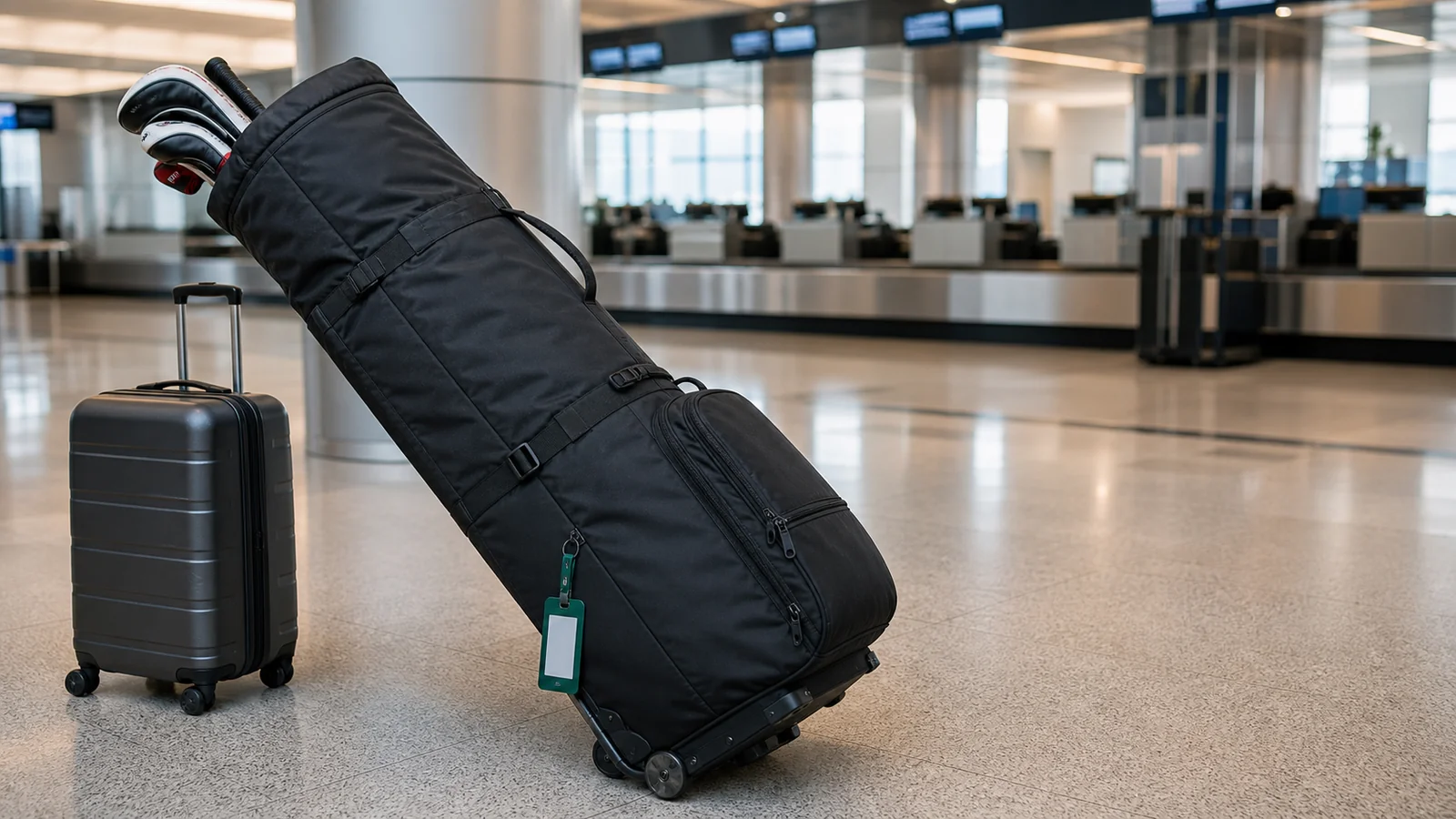
Golf Travel Bags Are Really About Risk Management
Golf travel bags look like luggage, but they solve a more specific problem: how to get long, awkward, expensive clubs through airports, rental cars, hotels, and course transfers without adding too much stress to the trip.
The best choice is not automatically the hardest case or the most padded soft bag. It depends on how often you fly, how valuable your clubs are, whether you use a stand bag or cart bag, how much storage you have at home, and how the bag will move once you land. A hard case can protect well but feel bulky in a small rental car. A soft case can be easier to handle but needs smarter packing.
For slow travel, the question is practical: will this bag protect your clubs and still fit the rest of the journey? If your golf trip includes a city hotel, train station, rental apartment, or walking a few blocks from parking, wheels and storage footprint matter almost as much as padding.
Know the Airline Rules Before You Compare Bags
Golf clubs cannot travel as carry-on items through TSA screening in the United States. They need to be checked. Airlines then apply their own checked-bag and sports-equipment rules, which can include weight limits, size limits, excess-baggage fees, and packaging requirements.
Several major U.S. airlines treat golf bags as checked sports equipment when they meet the airline’s size and weight rules. American Airlines and Delta, for example, publish a 115 linear inch limit for many sports items, with overweight fees when golf bags exceed standard checked-bag weight limits. These rules can change, and international routes may differ, so check your airline before every trip.
Before buying a golf travel bag, confirm:
- Maximum checked sports-equipment size
- Standard weight limit before overweight fees
- Whether the airline requires a hard-sided case for full damage coverage
- What items may be packed with clubs
- Whether oversize counters are used at your airport
- Baggage rules for your exact cabin, route, and loyalty status
Do this before you fall in love with a bag. A clever design matters less if the packed bag is always near the fee line.
Quick Comparison by Travel Style
| Travel need | Best bag type to compare | Why it fits |
|---|---|---|
| Maximum protection | Hard-shell golf travel case | Strong outer structure, good for frequent flying with valuable clubs |
| Easier storage and handling | Padded soft golf travel bag with stiff arm | Folds or stores better, easier in cars, still protective when packed well |
| Airport walking comfort | Wheeled soft case with stable base | Easier through terminals and hotel corridors |
| Large cart bag or extra gear | Larger soft travel cover | More room for shoes, clothes, towels, and a bigger golf bag |
| Occasional golf trip | Midweight padded soft bag | Usually enough if you pack carefully and accept some airline-risk tradeoff |
The main decision is hard case versus soft case. After that, compare wheel design, internal straps, padding around club heads, weight, size, and whether you can store the empty case at home.
Hard Case Golf Travel Bags
Hard cases are the most reassuring option when protection is the top priority. They create a rigid shell around the golf bag and clubs, which can help against crushing, heavy stacking, and rough conveyor handling. They are especially appealing if your clubs are expensive, custom-fitted, or hard to replace during the trip.
Good hard-case traits include:
- A rigid outer shell
- Secure latches
- Built-in wheels
- Interior shape that fits your actual golf bag
- Enough length for your longest club
- A warranty that makes sense for baggage handling
The tradeoffs are real. Hard cases are heavier, bulkier, and harder to store. They may not fit easily in compact rental cars, small hotel rooms, train luggage racks, or apartments. Some models also leave less room for shoes and clothing around the bag.
Compare this style if your priority is protection and you have enough storage and transport space. SKB-style hard cases are common examples of this category, with published case weights around the mid-teens in pounds depending on model.
Soft Golf Travel Bags
Soft golf travel bags are popular because they are easier to live with. A good padded soft case can roll through an airport, fold down better at home, fit more easily into cars, and leave room for shoes or clothes around the club bag. Many traveling golfers use soft bags with a stiff arm or support pole that extends above the driver to help absorb impact.
Look for:
- Thick padding around club heads
- A strong support pole or compatibility with one
- Internal straps to stop the golf bag from shifting
- Durable fabric and reinforced wear points
- Smooth wheels
- Lockable zipper pulls
- Enough room for your stand or cart bag
The caution is airline liability. Some airlines limit damage coverage for items packed in soft-sided cases, especially when the damage relates to inadequate protection. Read the rule before you fly. If you choose soft-sided protection, pack carefully and photograph the clubs before check-in.
Club Glove, Sun Mountain, CaddyDaddy, Bag Boy, and similar brands all make soft travel covers worth comparing, but model fit depends on your bag size and travel habits.
Why a Stiff Arm Matters
A stiff arm is a telescoping support pole that sits in the golf bag and extends higher than the club heads. Its job is simple: if the travel bag is dropped or compressed from the top, the support pole takes the hit before the driver shaft does.
It is not magic protection, but it is one of the most useful additions for soft cases. Some bags include one. Others require buying it separately. If you fly with a soft case, we would treat a stiff arm as close to essential.
Also consider these packing steps:
- Remove adjustable driver and fairway heads if you know how to do it safely.
- Store removed heads in padded headcovers inside your regular luggage.
- Wrap towels or clothing around club heads.
- Use internal straps so the golf bag does not slide.
- Keep heavy items away from shafts.
- Weigh the packed bag at home.
Do not pack valuables, rangefinders, watches, or fragile electronics in the checked golf bag unless you are prepared for loss or delay. Keep small expensive items in your carry-on when allowed.
Wheels and Handles Matter More Than They Look
Golf travel bags are long and awkward. Poor wheels can make a good-looking case miserable by the time you reach the rental-car counter.
Check:
- Wheel size and placement
- Whether the bag stands or tips when loaded
- Top, side, and end handles
- How the bag pulls over curbs
- Whether the wheels are protected from direct impact
- How the bag behaves when you add shoes or clothes
Four-wheel glider systems can feel easier in long terminals, while two-wheel designs can be simpler and more durable. There is no universal winner. If possible, load the bag with your actual golf bag and roll it before deciding.
For broader luggage planning, our budget travel backpack guide is useful if you need to keep your personal packing light while checking sports gear.
Size, Weight, and the 50-Pound Problem
Golf travel bags can hit airline weight limits quickly. A hard case, full-size cart bag, shoes, balls, rain gear, and extra clothes can push the packed bag toward overweight fees. A lighter soft bag gives you more margin, but may need more careful padding.
Before travel:
- Pack the bag exactly as you plan to fly.
- Weigh it at home.
- Measure the outside length, width, and height.
- Add those three numbers for linear inches.
- Compare the result with your airline’s current rule.
- Remove dense items if you are close to the limit.
Golf balls are small but heavy. Shoes, wet rain gear, and extra clothes add up too. If you are using the golf bag as a second suitcase, keep weight in mind before you reach the airport scale.
Hard Case vs Soft Case: Which Should You Choose?
Choose a hard case if:
- You fly often with expensive clubs.
- You prioritize protection over convenience.
- You have storage space at home.
- You usually rent a car large enough for the case.
- Your airline’s damage policy strongly favors hard-sided cases.
Choose a soft case if:
- You want easier storage and handling.
- You need to fit the bag into smaller cars or hotel rooms.
- You are willing to pack with a stiff arm and extra padding.
- You travel occasionally rather than constantly.
- You value lower empty weight.
For many travelers, a well-made soft case with a stiff arm is the practical middle ground. For frequent flyers with high-value clubs, a hard case can still be worth the inconvenience.
Models and Categories Worth Comparing
We do not treat this as a hands-on ranking, and model details change. Use these as category examples to start your research.
| Bag or category | Why compare it | Watch out for |
|---|---|---|
| Club Glove Club Traveler or Last Bag styles | Durable soft-case reputation, stiff-arm compatibility, lighter handling | Premium cost and soft-case airline liability limits |
| Sun Mountain ClubGlider style bags | Easier rolling with leg-style wheel support | More moving parts and a larger airport footprint |
| SKB hard-shell cases | Strong hard-case protection and rigid structure | Bulky storage, heavier packed weight, rental-car fit |
| CaddyDaddy padded soft bags | Value-focused soft travel covers with padding and wheel options | Compare fabric, wheel quality, and warranty by model |
| Hybrid hard-top soft bags | Extra protection near club heads with softer storage below | Can be neither as compact as soft bags nor as rigid as hard cases |
The right bag is the one that fits your clubs, your airline rules, your storage space, and your arrival logistics.
City-Hotel and Rental-Car Reality Check
Golf trips often include non-golf travel. You may land in a city, stay in a hotel with small elevators, take a shuttle, rent a compact car, or meet non-golfing companions who do not want the whole trip organized around baggage.
Before buying, ask:
- Will this fit in the rental car I actually book?
- Can I roll it from parking to the hotel?
- Where will it sit in the room?
- Can one adult manage it with a suitcase?
- Will it be awkward on trains or hotel stairs?
- Can I store it at home between trips?
If the golf portion is only one day of a broader city trip, renting clubs at the course may be easier. If the clubs are central to the trip, a better travel bag is worth planning around.
FAQ
Are hard golf travel cases better than soft bags?
Hard cases usually offer stronger crush protection, but they are heavier and bulkier. Soft bags are easier to store and handle, especially with a stiff arm and careful packing, but airline damage coverage can be more limited.
Can golf clubs be carried on a plane?
No. TSA lists golf clubs as not allowed in carry-on bags and allowed in checked bags. Airlines then apply their own checked sports-equipment rules.
Do airlines charge extra for golf travel bags?
Often golf bags count as checked sports equipment when they meet the airline’s size and weight rules. Extra charges may apply if the bag is overweight, oversized, or beyond your baggage allowance.
What is a stiff arm for a golf travel bag?
A stiff arm is an adjustable support pole that extends above the club heads inside a soft travel bag. It helps absorb top impacts before the longest club shafts take the force.
Should I pack shoes and clothes in my golf travel bag?
You can often use soft clothing as padding, but watch the weight. Golf balls, shoes, and extra gear can push the checked bag over the airline’s standard limit.
The Bottom Line
Golf travel bags are a balance between protection and livability. A hard case gives the most confidence when clubs are valuable and flights are frequent. A padded soft case with a stiff arm is easier for many travelers who need to roll through airports, fit into cars, and store the bag at home.
Choose the bag for the whole trip, not just the baggage counter. The right one protects your clubs without making every transfer feel like the hardest part of the vacation.
You might also like

Travel Router: Is It Worth Packing for Wi-Fi?
Decide if a travel router fits your trip by checking hotel Wi-Fi, VPN needs, device limits, setup effort, and alternatives.

Dog Travel Crate at Walmart: Choose the Right One
Use Walmart listings carefully by checking crate size, material, trip type, airline rules, safety details, and return terms.
Guava Lotus Travel Crib: A Practical Review
See where the Guava Lotus Travel Crib works well for family trips, and where its floor mattress and price may not fit.